

In today’s rapidly evolving digital world, AI generated brand identity is changing how brands are created, viewed, and developed. Businesses need to comprehend how this new form of identity functions and why it’s turning into one of the biggest creative shifts of our time, as algorithms increasingly impact visuals, messaging, and customer experience.
A few years ago, designers, strategists, photographers, and storytellers shaped brand identity nearly exclusively. Unexpectedly, algorithms, prediction models, and generative systems are increasingly influencing brands today.
What used to take weeks of ideation can now be produced in a matter of minutes. This was a quick cultural change rather than a gradual one.
The emergence of the AI generated brand identity, a strategy that is revolutionizing how brands communicate, appear, feel, and change, is at its core.
Companies in all sectors are realising that AI is evolving from a supportive tool to a creative collaborator.
What is AI Generated Brand Identity?
AI generated brand identity refers to the process of creating a brand’s visual and verbal identity using artificial intelligence systems trained on data, patterns, and human inputs.
Instead of relying only on traditional methods, brands now use AI to generate logos, color tones, messages, and even emotional relevance based on audience behaviour and preferences.
It is not about replacing creativity. It is about increasing it. AI generated brand identity allows brands to move faster, explore more possibilities, and build identities that are both strategic and as per audience preferences.
Adobe’s 2025 Creators’ Toolkit survey of over 16,000 creators found that 86% were already using generative AI in their creative work, most commonly for editing and enhancement, generating new assets, and ideation.
Core Elements of AI Generated Brand Identity
An AI generated brand is not limited to just a logo. It is a complete system of multiple interconnected things that work together to shape how a brand is looked at.
These include:
- Visual identity systems including logos, icons, and patterns
- Typography that shows brand personality and readability
- Color palettes designed using psychological and emotional thinking
- Brand voice and tone that is as per the platforms
- Digital and physical elements such as packaging, website visuals, and social creatives
When these elements are generated and refined using AI, they become more consistent, scalable, and aligned with audience expectations.
The Evolution of Creativity: How It Happened So Fast
The first AI marketing tools were automated post scheduling, ad optimisation, and performance analysis. However, as generative AI models developed, full creative conceptualization something more intriguing became feasible.
The idea of an AI generated brand identity emerged with the introduction of tools that could instantly create mood boards, typographic concepts, packaging prototypes, naming ideas, and brand voice systems.
The goal of this change was to increase the capabilities of designers rather than to replace them. In order to validate concepts, compare styles, test emotional resonance, and simulate variations that would otherwise take weeks, brands started utilising AI.
Adopting this gave designers a tactical edge and allowed them to produce more inventive work in a much shorter amount of time.
The distinction between AI creation and AI assistance became hazier over time. Brands came to the realisation that AI could produce mathematically distinct and emotionally captivating patterns, textures, and visual systems that people could never have imagined.
The AI generated brand identity became more than just a fad all of a sudden. It turned into a differentiator in the marketplace.
How AI Generated Brand Works
Behind every AI generated brand is a structured process that combines data, creativity, and human direction. Here’s how it typically works:
- The brand inputs its vision, audience, and positioning into the system
- AI generates multiple variations of logos, visuals, and messaging
- Data analysis helps identify which directions perform best emotionally and visually
- Designers refine and humanise the strongest concepts
- The identity is tested across platforms for consistency and adaptability
This process allows AI generated brand identity to move from idea to execution much faster while still maintaining creative depth.
The New Era of Adaptive Branding
Conventional branding was unchanging. After a logo or identity system was decided upon, it didn’t change for years. However, brands now work in environments where cultural waves, consumer sentiment, competitive landscapes, and daily social media trends change at breakneck speed. Brands need adaptable identities to survive.
AI brought adaptability.
A truly modern AI generated brand identity is not fixed. It learns. It evolves. It reacts.
- Logos that subtly shift color based on trending audience behavior
- Typography styles that adapt to campaign mood
- Visual patterns generated from real-time data
- Messaging frameworks tuned in real time through natural language processing
This adaptability isn’t chaotic; it’s strategic. It allows brands to stay relevant without losing consistency.
When consumers see a brand that updates, responds, and evolves naturally, they feel connected in a way that static design never offered.
This is really a trust problem before it is a technology problem, something I explore fully in my guide on the importance of trust in branding.
AI Branding vs Traditional Branding
The difference between traditional branding and AI generated brand identity lies in how quickly and intelligently brands can evolve.
| AI Generated Branding | Traditional Branding |
|---|---|
| Fast execution and iteration | Time consuming process |
| Data driven decisions | Research based decisions |
| Adaptive and flexible | Static and fixed |
| Scalable across platforms | Limited scalability |
This shift is not about replacing traditional methods but enhancing them with speed, intelligence, and adaptability.
Why Human Creativity Still Leads the Process
The idea that AI eliminates the need for original thought is becoming more widespread. In actuality, human guidance still plays a major role in the AI generated brand identity. AI lacks human comprehension of context, culture, subtlety, and emotion. AI is particularly good at quick, accurate, and infinite execution.
Human creativity guides:
- the strategy behind the identity
- the emotion the brand wants to evoke
- the cultural message the brand stands for
- the narrative that ties everything together
AI simply amplifies these ideas by generating possibilities at scale.
Together, human intuition and AI create identities that are bold but in line with consumer expectations, creative but data driven, and innovative but consistent.
Advantages and Limitations of AI Generated Brand
Like any powerful system, AI generated brand comes with both strengths and limitations.
Advantages
- Faster execution and quicker turnaround times
- Ability to generate multiple creative directions instantly
- Data backed decision making for better audience alignment
- Systems that maintain consistency across platforms
Limitations
- Lack of deep emotional and cultural understanding without human input
- Risk of generic outputs if not guided strategically
- Over dependence on automation can reduce uniqueness
The real power lies in balance. When guided correctly, AI generated brand identity enhances creativity instead of limiting it.
The Psychology Behind AI Driven Visual and Verbal Identity
Visuals are rarely the only aspect of brand identity. It has to do with the emotional signals that images convey. Because AI can analyze the psychology behind visual and verbal identity, it is especially powerful in this area.
It can test:
- which color palettes evoke trust
- which typography styles feel premium
- which logo forms generate higher recall
- which tone of voice increases engagement
This information enables brands to create identities that are based on psychological resonance as well as creativity. Millions of data points that human designers could never manually process inform each iteration of an AI generated brand identity.
But human creativity is not diminished by this. It makes it better. Designers are able to create identity systems that feel incredibly intuitive and emotionally accurate because they have a better understanding of what works and why.
If you want to see how this fits into a full marketing plan, our guide to the nine digital strategies every brand needs in 2026 covers it in more depth.
The Real Tools Brands Are Using in 2026
Looka (looka.com): AI based solution that designs logos and other brand elements including color schemes, business cards, and social media templates. Starting price is around ₹1,700 per logo package. Good for beginners looking for a complete set of creations at a fast speed. The AI of Looka considers your industry, taste, and competition before generating the designs.
Adobe Firefly: AI provided by Adobe that is included into the Adobe Creative Cloud software suite. Compared to external AI solutions, Firefly utilizes only those images which either are licensed or are in the public domain, which makes it the most copyright safe AI for brand design. This product may be used to create background images, patterns, and product visuals.
Brandmark.io is built specifically for creating AI-generated brand identities. The software generates logos, color palettes, and font pairing via AI trained on brand design. Also comes with an AI based brand readability test which measures how well your brand identity is performing against various background and size requirements which is used to take manual testing by designers traditionally.
Midjourney: Used by professional brand designers for generating mood boards, visual direction, and concept exploration. It is not a brand kit generator itself, it is the most advanced tool available for exploring visual language before picking a direction. Most Indian design studios are starting to use Midjourney for their initial conceptualization of brands before executing in traditional software.
Canva Magic Studio: This AI driven layer of the popular Canva software, known to almost all Indian small business owners, now comes with brand voice generation, automatic application of brand kits, and AI generated images in the current design flow. For businesses looking to build an AI generated brand identity, it has the easiest learning method among all other AI driven branding tools and includes the software already used by Indian SMBs.
Real Cost Comparison for Indian Brands:
| Tool | Cost | Best For |
| Looka | ₹8,300 – ₹11,200/year | Full brand kit, startups |
| Adobe Firefly | ₹870 – ₹17,400/month | Licensed commercial imagery |
| Brandmark | ₹3,000 – ₹17,000 one time | Logo and colour identity |
| Midjourney | ₹870 – ₹10,400/month | Visual direction and moodboards |
| Canva Magic Studio | Free – ₹4,000/year | SMBs, social content |
Prices as of July 2026, converted from USD at approximately ₹87/USD, and are approximate. Exchange rates and pricing change frequently, always confirm current pricing directly on the tool’s official site before purchasing.
A Real World Case: How Heinz Used AI to Discover Its Own Brand Identity
In 2023, Heinz completed what is probably the most well documented live AI assisted brand campaign. Heinz creative agency, Rethink Canada, put the term “ketchup” into request to various AI image generators such as DALL-E and Midjourney. Unprompted, in response to all these requests, the image generated by any of these AI looked exactly like iconic Heinz bottle in red color.
The important point about this simple experiment is that Heinz brand image has become so ingrained into global visual culture that AI, trained on entire Internet image library, associates the concept of “ketchup” with Heinz brand image without any prompt. That is how “Draw Ketchup” campaign was born; it became international, won several Cannes Lions, and cost absolutely nothing in terms of production expenses. This experiment also demonstrated how a strong AI generated brand identity can become deeply embedded in consumer perception and visual culture.
Relevance of this case study for any business lies in the basic principle: distinctiveness of your brand image is measurable. If AI tool, when shown a category name, generates your brand image, then it means that your brand image is distinct. If not, it is not.
For Indian businesses, this translates to an actual practice; software such as Adobe Firefly and Midjourney can be utilised as a free test to see if the branding language you have created is truly unique or merely a repetition of what is standard within that category.
The Hidden Advantage: Consistency at Scale
It gets harder to stay consistent as brands grow across platforms. Visuals, text, and narrative must be tailored to each medium. The AI generated brand identity provides unparalleled value in this situation.
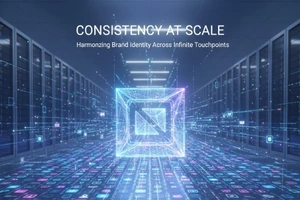
AI ensures that:
- every asset follows the same rules
- tone of voice remains stable
- colour values stay accurate
- icon styles match across platforms
- brand guidelines update automatically
This solves one of the biggest historic branding challenges: drift.
Who Should Use AI Generated Brands?
AI generated brand identity is not limited to large industries or businesses. It is equally valuable for:
- Startups looking to build identity quickly
- Personal brands aiming for strong digital presence
- E-commerce businesses managing multiple products
- Agencies handling multiple clients and campaigns
For any brand that wants to move faster while staying consistent, AI becomes a powerful advantage.
Ethics, Authenticity, and the Human Touch
The rise of AI also raises real concerns. Is it possible for an AI generated brand identity to feel genuine? Are identities generated by algorithms trustworthy? How carefully AI is applied will determine the answer.
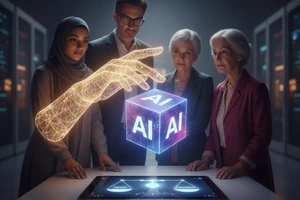
Intention is the source of authenticity.
A brand’s identity feels human rather than artificial when it employs AI to comprehend emotions, react to audience needs, and produce meaningful experiences. Only when brands employ AI without strategy or human insight does the AI generated brand identity become inauthentic.
Brands that combine human morality, empathy, and storytelling with machine intelligence will ultimately rule the future.
Real Risks Brands Face with AI Branding
While AI opens new possibilities, using it without a clear brand strategy also carries real risks.
- Over reliance on AI can lead to repetitive or similar looking designs
- Lack of human storytelling can reduce emotional depth, making it harder for users to connect with the brand.
- Poor implementation can make brands feel artificial or disconnected
This is why human direction remains essential in shaping meaningful brand identities.
These branding risks often show up alongside bigger budget mistakes too, which I cover in my guide on why businesses waste money on digital marketing in 2026.
When Should You Use AI for Branding?
Not every situation requires AI, but in many cases, it can significantly improve outcomes.
AI generated brand identity works best when:
- A brand needs to launch fast
- Multiple creatives need to be tested
- Rebranding is required within a short timeline
- Content and assets need to scale across platforms
Used strategically, AI becomes less of a tool and more of an advantage.
The Future: Where Is AI Driven Branding Going Next?
We are still only in the early phase of AI driven creativity. Over the next few years, the AI generated brand identity will evolve far beyond static assets.

We will see:
1. Real time adaptive logos
Logos that change shape or colour based on consumer behaviour or environmental data.
2. Personalized micro identities
Each customer may experience a slightly different version of the brand depending on their preferences.
3. Emotionally intelligent brand voices
AI that adjusts tone based on user sentiment analysis.
4. Predictive identity systems
Brand visuals and messaging generated based on future customer demands before they happen.
Hybrid creative teams: AI collaborates with designers, writers, and strategists across the whole team.
Science fiction is not what this is. It is the logical next stage of branding.
The change is already taking place. The next ten years’ visual and emotional landscape will be shaped by the brands that adopt it now.
Frequently Asked Questions
1. What does the term AI generated brand identity mean?
Using AI tools to develop and make a brand’s visual and verbal identity such as logos, colors, layouts, etc based on data, prompts, and strategic inputs.
2. What distinguishes AI generated branding from conventional branding?
While AI generated branding incorporates data analysis, trend prediction, and automation, traditional branding only depends on human research and design. The result is faster execution, scalable outputs, and data-driven, human-checked creative decisions.
3. Is the brand identity produced by AI unoriginal or uncreative?
No. While AI offers structured concepts and variations, creativity arises from the selection, refinement, and guidance of those outputs. AI generated brand identities continue to be unique, strategic, and emotionally relevant when combined with human insight.
4. Can AI keep all brand assets consistent?
Yes. Consistency is one of the greatest benefits of an AI generated brand identity. AI tools ensure a consistent brand identity at scale by helping to maintain consistent colors, layouts, and language across platforms.
5. Is brand identity produced by AI appropriate for every industry?
AI generated branding is effective in a variety of sectors, including startups, e commerce, personal brands, and service based companies. The secret is to use strategic direction to align AI outputs with industry standards and brand positioning.
6. To what extent does AI generated branding require human intervention?
Human participation is important. AI helps with ideation and execution, but human creativity and expertise are what drive brand strategy, storytelling, emotional connection, and final decision making.
7. Can a brand identity created by AI change over time?
Of course. Through the analysis of performance data, audience feedback, and trends, AI enables brands to evolve and adapt, making it simpler to update visuals and messaging while keeping the core brand identity.
8. Is AI generated brand identity suitable for startups?
Yes. Startups benefit the most because AI allows them to create professional, scalable brand identities quickly without large budgets or time taking processes.
9. Can AI replace brand designers completely?
No. AI can assist in generating ideas and speeding up execution, but human designers are essential for strategy, storytelling, and emotional connection with users.
10. How can brands ensure uniqueness when using AI?
Uniqueness comes from how AI is guided. By combining clear brand strategy, human creativity, and refinement, brands can create identities that feel original and different.
Conclusion: A Shift No One Prepared for But Everyone Must Adapt To
The emergence of AI generated brand identity heralds a new era in which computation and creativity coexist. Companies that previously relied only on human intuition now have access to a potent partnership with AI that sharpens strategy, boosts creativity, and speeds up execution.
The change was not anticipated. It didn’t happen gradually. It came out of nowhere and changed the way brands think, communicate, and develop. Brands that combine human creativity with AI generated brand identity to create identities that feel intelligent, emotional, and alive will win the future, not those that choose one over the other.


