Why Most Businesses Waste Money on Digital Marketing – The lack of a clear strategy is one of the main reasons why most companies waste money on digital marketing. Many brands don’t have a clear plan before launching advertisements or posting on social media.
Digital marketing becomes responsive rather than planned in the absence of a strategy. Unpredictable results and inconsistent messaging are the outcome of campaigns built on assumptions rather than data.
Many businesses spend money every month on ads, content, and promotions but fail to see measurable growth. This often happens because execution starts before planning. Budget gets consumed through random actions instead of strategic systems, which clearly shows why most businesses waste money on digital marketing.
A solid strategy brings together platforms, content, budget, audience intent, and business objectives into a single plan.
Choosing the right agency matters explore Digital Marketing Agency in Nehru Place: Top 5 Agencies to Grow Your Business.
Common Signs Your Business Is Wasting Marketing Budget
If campaigns are running but leads are not increasing, if content is getting views but not enquiries, or if ad spend keeps rising without returns, these are warning signals. Recognising these patterns early helps brands take corrective action before more budget is lost.
No Clear Digital Marketing Strategy
A lot of brands start posting on social media and run ads without having a clear plan. One of the biggest reasons why most businesses waste money on digital marketing is the absence of a defined strategy.

You start campaigning on guesses instead of facts, which leads to messages that aren’t always clear and results that aren’t always what you expect. A strong strategy brings together business goals, audience intent and budget into one plan that works together.
A proper digital marketing strategy usually includes monthly goals, target audience clarity, platform selection, content direction, budget distribution, and performance benchmarks. Without these elements, businesses keep spending while lacking right direction.
When brands see digital marketing as a task to finish instead of a planned and well thought of system, they waste money without getting anything in return.
Running Ads Without Understanding the Sales Funnel
Paid advertising is often seen as a shortcut for sales. This happens because ads are launched without understanding the sales funnel.
Businesses run ads expecting fast results but, only get disappointed by low quality leads or no conversions at all.
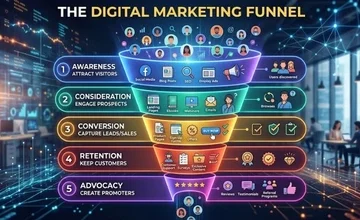
Every customer does not buy instantly. Some people are discovering the brand for the first time, some are comparing options, while others are ready to purchase. Ads perform best when campaigns are aligned with awareness, consideration, and conversion stages.

Audiences are not shown awareness ads, and are directly shown lead or sales-based ads, which ignore warm audiences. As a result, investment on ads increases but trust of customers is never built.
Ads are too often treated as isolated actions rather than steps within a buyer’s journey.
Chasing Trends Instead of Business Goals
Digital platforms are full of reels, viral formats, trending audios, and popular hashtags. Following trends can help you get more attention, but doing so without thinking can often make marketing less connected to business goals.
Companies want people to be involved instead of getting results. Content may get a lot of likes and views, but it may not get you any enquiries, leads, or sales. When you use trend based marketing without a purpose, it becomes just traffic instead of leads or sales and this disconnect turns creative effort into wasted budget with no return.
Trending content can create visibility, but visibility without intent doesn’t build revenue. Viral reach feels exciting, but business growth depends on qualified attention, trust, and conversion focused actions.

The gap between effort and outcome grows when marketing chases views instead of revenue, even when budgets keep increasing.
Digital marketing that works combines creativity with goals and not just popularity.
Targeting the Wrong Audience
Targeting a lot of people might help you gain likes and views, but it does not usually help you get more sales.
Targeting accurately makes sure that marketing efforts reach people who are likely to buy something, not just scroll. Another big reason is that they don’t target the right people.
Strong targeting includes understanding age group, location, interests, buying behaviour, pain points, and spending power. Reaching a smaller, more relevant audience often performs better than reaching thousands of random people. Mismatched targeting is one of the clearest examples of budget spent without real return.

DigiAdGalla also designs and develops fast, responsive, and conversion-focused websites, learn more about our website design & development services here.
Weak Content That Doesn’t Build Trust
The focus of digital marketing is content. However, a lot of companies prioritize quantity over quality. This is a common and costly mistake, posting content daily without clarity, value, or relevance behind it.

Audiences become disengaged when content fails to inform, solve issues, or establish credibility. Potential conversations are decreased and brand authority is weakened. To earn trust, consistency, relevance, and useful content is the key strategy.
Trust building content may include customer testimonials, behind the scenes insights, educational posts, before after results, frequently asked questions, and founder’s point of view. This type of content helps audiences feel confident before buying.
Content is just one piece of a bigger system, our guide to the nine digital strategies every brand needs in 2026 covers the rest.
No Tracking, No Analytics, No Optimization
Marketing without tracking is guesswork. Many businesses fail to monitor performance, leading to repeated mistakes and repetition of same campaigns.
Without analytics, brands don’t know what works, what doesn’t and where should the budget be adjusted. Decisions are made emotionally instead of strategically, which increases costs and reduces ROI.
Useful tracking tools may include Google Analytics, Meta Pixel, Search Console, website heatmaps, CRM systems, and lead source tracking. Good data reveals where money should be scaled and where waste should be reduced.

Tracking, analysing, and optimising is not optional, it is essential for growth. Brands that skip this step end up spending without ever knowing what’s actually working.
Expecting Instant Results from Digital Marketing
Digital marketing is often said to be fast and effortless. This creates unrealistic expectations. When results don’t appear instantly, businesses abandon strategies or jump to new tactics.
SEO usually takes time to build authority. Paid ads often require testing phases. Social media growth depends on consistency. Sustainable digital marketing rewards patience, learning, and improvement over time.
Digital marketing compounds over time. It requires consistent effort, proper analysis, and a well built strategy to deliver sustainable results. Digital marketing doesn’t work like magic, results come when the foundation is built properly first.

Consistency, testing, and refinement are what create long term returns. Expecting immediate outcomes often leads to panic replacing patience and that’s when budgets get wasted.
Patience with results is really a trust issue in disguise, something I explore fully in my guide on the importance of trust in branding.
Choosing the Wrong Agency or Freelancer
Hiring based solely on low cost or flashy promises often leads to disappointment. Some agencies focus on vanity metrics rather than business outcomes, while others lack strategic depth.
Vanity metrics are metrics that show visibility or popularity, but not performance. In short, it means likes and views, not sales and leads.

Businesses end up paying for activity, not results. The wrong partner drains budgets through poor execution, lack of transparency, and misaligned goals.
The right digital marketing partner prioritizes strategy, reporting, and growth not just deliverables.
Businesses should look for transparent reporting, realistic promises, case studies, communication quality, and custom strategy. Choosing only on low pricing often becomes expensive later.
Poor Brand Positioning and Messaging
Even well-executed campaigns fail when the message a brand wants to convey is unclear. If a brand doesn’t clearly communicate who it is, what it offers, and why it matters, audiences won’t connect or trust the brand.

This is the kind of mistake that feels small but carries a large negative impact.
Confusing messaging creates confusion, lowers customer trust, and reduces conversion rates.
Strong messaging quickly explains who the brand helps, what problem it solves, and why it is different. Clear communication improves trust and conversion rates across all platforms.
How to Stop Wasting Money on Digital Marketing
To stop wasting money, businesses must shift from random tasks to structured systems. This includes defining goals, understanding the customer journey, creating value driven content, tracking performance, and continuously optimizing efforts.
Over time, businesses that look at their campaigns every month, make their landing pages better, update their creatives, study how customers act, and improve their targeting usually get better returns.
If SEO is part of your budget, our search engine optimization services page explains how we approach rankings and visibility.

Instead of building systems, many brands rely on shortcuts, spending more but growing less.
Digital marketing works best when strategy, creativity, data, and patience come together. Brands that build this system stop wasting money because they’ve already fixed the root cause. When done right, it becomes one of the most cost effective growth tools available.
Nykaa shifted from Product Promotion to Trust Driven Reels
At first, Nykaa primarily used social media for product focused advertising. The cost of acquiring new customers continued to increase despite the high visibility. The company changed the focus of its Reels strategy from “buy this product” to influencer driven and educational content. Nykaa’s earlier approach is a textbook example of prioritizing visibility over actual value.
Nykaa developed skincare routines through short reels, creator-led content, and problem-solving storytelling in place of hard selling.

These reels corresponded to awareness, consideration, and conversion phases of the buyer journey.
As a result, Nykaa greatly enhanced the quality of engagement, decreased the need for aggressive advertising, and raised organic conversions. Nykaa’s evolution shows what changes once strategy, trust, and intent start working together.
You can check how video influences purchase decisions.
What Businesses Can Learn from Nykaa
The shift proves that attention alone is not enough. Brands grow faster when they educate, solve problems, build trust, and guide users through the buying journey, which is exactly the mistake most businesses make when they push sales messages too early.
Example of How Businesses Waste Marketing Budget
A business spending ₹50,000 monthly may lose money through poor targeting, weak creatives, low converting landing pages, no retargeting, and lack of analytics. Budget waste often happens through multiple small mistakes rather than one big mistake.
Real Example: How a Delhi Based Brand Fixed Their Wasted Ad Spend
Now I will share a real case study that comes from our client experience in a retail brand from North Delhi that was spending ₹45,000 per month on Meta ads with no sales, they weren’t even recovering what they spent on the ads.
Once we audited their ad accounts, we found three common mistakes that explain exactly why this was happening:
First, their whole budget was set to “All of India” while their delivery radius was just 15 km. More than 80% of their ad views were going to people living in cities where they couldn’t deliver.
Second, there were 11 different ad sets running at once with the daily budget of ₹135 each. As a practical rule of thumb, most advertisers need a daily budget high enough to generate about 50 conversions per ad set per week, Meta’s actual threshold for exiting the learning phase. For many small business campaigns in India, this often works out to roughly ₹400 to ₹500 per day, though the right number depends on your specific cost per result. None of their ads exited the learning phase because of the lower daily budget being set up.
Third, their landing page was their Instagram account rather than the website. That meant that there were no sales tracking, no pixel activation, and no retargeting audience.
Following these three adjustments that is merging 3 ad sets with budgets above ₹500 per day, target exclusively Delhi NCR, use a WhatsApp link with a UTM tracker as destination URL for ads, their cost per WhatsApp inquiry went from being unmeasurable to ₹87 in 45 days. This clearly illustrates why most businesses waste money and how fixing technical campaign issues can completely change the results without increasing the budget.
Their spend of ₹45,000 per month remained the same. The outcome was totally different.
Frequently Asked Questions
1. Why do most businesses fail at digital marketing?
Most businesses fail because they lack strategy, clear goals, and proper tracking, leading to wasted spend and poor ROI.
2. Is digital marketing still worth the investment?
Yes, when executed strategically with clear objectives and optimization, digital marketing delivers strong long term returns.
3. How long does digital marketing take to show results?
Results typically take 3–6 months depending on industry, competition, and consistency.
4. Are ads the most important part of digital marketing?
No. Ads amplify strategy; they cannot replace strong messaging, content, and targeting.
5. How can businesses avoid wasting marketing budgets?
By setting goals, understanding their audience, tracking performance, and continuously optimizing campaigns, businesses can avoid the most common budget draining mistakes.
6. Should small businesses invest in digital marketing?
Yes, but with a focused strategy and realistic expectations.
7. What is the biggest mistake businesses make in digital marketing?
Treating digital marketing as a quick fix instead of a long-term growth system.
Quick Checklist to Avoid Wasting Marketing Money
- Set clear goals
- Define target audience
- Track every lead source
- Build trust driven content
- Test campaigns regularly
- Improve website conversions
- Focus on ROI instead of vanity metrics
Why Smart Businesses Win with Digital Marketing
Companies that see marketing as a system instead of a bunch of random tasks tend to grow faster. They use data, strategy, consistency, and creativity to get results that are easy to predict over time.
Conclusion
Digital marketing is not broken. The way it’s approached often is.
When strategy replaces guesswork and value replaces noise, digital marketing stops being an expense and starts becoming an investment.
Understanding these common mistakes helps businesses avoid unnecessary risk and build systems that drive real growth.