Semrush went through a genuinely confusing restructure in 2025 and 2026, and a fair number of Semrush reviews online still describe the old, simpler pricing structure that no longer fully reflects what you will actually see at checkout.

This Semrush review focuses specifically on what changed, what you actually pay under each current track, and who the tool genuinely fits, with every figure sourced.
Quick Verdict: Who Semrush Actually Fits
Semrush is a strong fit for agencies, in-house marketing teams, and serious content or SEO professionals who need a comprehensive platform covering keyword research, site audits, backlink analysis, and competitor tracking in one place. It is a weaker fit for a solo blogger or very early-stage small business mainly wanting basic keyword lookups, where the price gap to simpler tools is significant enough to matter.
If you are still deciding between SEO tools generally rather than specifically evaluating Semrush, our beginner SEO tools guide covers free starting points before you consider a paid platform like this one.
Semrush Pricing: What Changed and What You Pay Now
This is the part of Semrush’s pricing most existing reviews get wrong, or at least out of date. Semrush restructured its pricing more than once across 2025 and 2026, first splitting into two parallel plan tracks, according to independent trackers like AI Stack Picks and ResourceRa’s plan comparison, and then consolidating further into today’s structure.
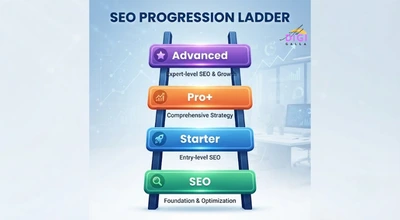
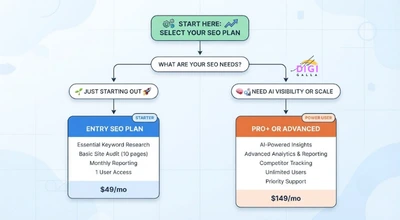
Semrush has since simplified this further, the original three-tier Classic structure (Pro, Guru, Business) has been consolidated into a single “SEO” plan at $139 a month ($117.33 billed annually), confirmed directly on Semrush’s own live pricing page. If you need more than this entry tier offers, projects and keyword tracking scale up through the Starter, Pro+, and Advanced tiers below, which now cover both the traditional SEO toolkit and AI visibility tracking together, rather than SEO Classic and Semrush One being fully separate tracks.
Semrush One, the newer bundle, combines the traditional SEO toolkit with Semrush’s AI visibility and search monitoring tools under one subscription, priced at Starter for $199 a month, Pro+ at $299 a month, and Advanced at $549 a month.
The practical takeaway: the entry SEO plan covers traditional SEO tools, keyword tracking, site audits, backlink data, at the lowest price. The Starter, Pro+, and Advanced tiers cost more but now bundle AI visibility tracking in by default rather than as a separate purchase. Annual billing saves roughly 17% on either track.
What You Get on Each Plan
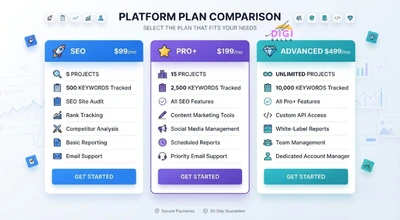
SEO, the entry tier, suits a single user managing a handful of projects, with 5 websites to monitor and 500 tracked keywords daily.
Pro+ adds meaningfully more headroom, 15 websites to monitor, 1,500 tracked keywords, content optimization tools, keyword cannibalization analysis, and access to historical SEO data, which the entry SEO tier does not include.
Advanced is built for larger teams, adding API data integration, a higher volume of tracked keywords and websites (up to 5,000 keywords, 40 sites), and features like Share of Voice reporting aimed at agencies managing multiple client accounts.
The Free Plan and Trial: What’s Actually Available
Semrush offers a limited free account, 10 searches a day with up to 10 results per report, which is enough to explore the interface but genuinely insufficient for real research work. A 7-day free trial is available on paid plans and gives full access to test the actual toolset before committing.
If you want a genuinely usable free tier rather than a brief trial, it is worth comparing Semrush’s free plan against Ahrefs’ free backlink checker, which we covered in more depth separately, since Ahrefs’ free offering is meaningfully more usable for a quick, no-commitment check.
Key Features Worth Knowing About
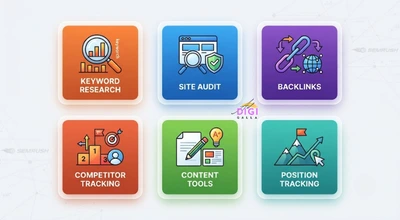
Semrush’s core strength is breadth rather than any single standout tool, keyword research, site audits covering roughly 140 technical checks across categories like crawlability, Core Web Vitals, and structured data, backlink analysis, competitor tracking, and content tools all live under one platform.
For a team that would otherwise be paying for several separate specialized tools, this consolidation is a genuine part of the value case, even though the subscription cost is higher than any single specialized tool on its own.
Ease of Use and the Learning Curve
Semrush’s interface reflects its breadth, there is a genuinely steep learning curve for a first-time user compared to a simpler, single-purpose tool. Most reviews describe this as a real trade-off rather than a flaw exactly, the platform does more, so there is more to learn, but it is worth budgeting real time to get comfortable with it rather than expecting to be productive within the first session.

A practical way to manage this: pick one tool inside Semrush, Site Audit or Position Tracking are usually the most immediately useful, and get comfortable with that single workflow before trying to use the entire platform at once. Trying to learn keyword research, technical audits, backlink analysis, and content tools simultaneously in the first week is the most common reason new users feel overwhelmed and undervalue the subscription early on.
Semrush Review: Genuine Pros and Cons
Pros:
- Genuinely comprehensive, one platform covers keyword research, technical audits, backlinks, and content tools that would otherwise require several separate subscriptions
- Strong historical and competitor data on the Pro+ tier and above
- Annual billing offers a real, meaningful discount of roughly 17%
- The new Semrush One bundle is a genuine option if AI search visibility tracking matters to your specific strategy
Cons:
- Semrush has restructured its pricing more than once recently, and a fair amount of existing content online has not caught up with the current structure
- The free plan’s 10-searches-a-day limit is too restrictive for real use, unlike some competitors’ more usable free tiers
- Pricing sits meaningfully above several capable alternatives at comparable keyword-tracking volume, one pricing tracker found SE Ranking priced at $129 a month against Semrush’s $139 at the same 50-tracked-keyword volume, and tools like SE Ranking and Mangools are commonly cited as lower-cost options worth comparing if budget is the primary constraint
- The learning curve is real, a solo user or very small team may pay for depth they do not have time to use fully
How Semrush Compares to Alternatives
Against Ahrefs, which we covered in our beginner SEO tools guide, Semrush leans slightly more toward broader marketing use, content, PPC research, social tools, alongside SEO, while Ahrefs has traditionally been seen as stronger specifically for backlink data depth. Both are priced in a broadly similar range at comparable tiers, so the choice often comes down to which specific toolset you will use most, not a clear overall price or quality gap between them.
Against lower-cost alternatives like SE Ranking, Semrush’s core advantage is breadth and brand maturity rather than being the cheapest option at a given feature level, which is worth being honest about if budget is the primary constraint.
A Hypothetical Example: Choosing the Right Tier
To make this concrete, here is a hypothetical example based on patterns commonly seen in this kind of decision, not a real client case.
Imagine a small marketing agency managing SEO for eight clients, currently using a mix of spreadsheets and a cheaper single-purpose rank tracker. A team in this position would typically evaluate Semrush’s Pro+ tier first, since the 15-website, 1,500-keyword allowance and historical data access map well onto managing multiple client accounts, even though this tier now comes bundled with baseline AI visibility tracking rather than as a fully separate add-on.
A team following this kind of approach would typically only consider upgrading to a higher tier specifically for deeper AI visibility tracking if it becomes a genuine, client-requested deliverable, rather than paying for it speculatively before there is real demand for it. This is illustrative only, and the right track and tier depend on your own team’s actual client mix and reporting needs.
Common Mistakes When Buying an SEO Tool Subscription
Comparing an old, outdated pricing structure against a competitor’s current one. As this review shows, Semrush restructured its plans meaningfully in 2025 to 2026, so it is worth double-checking that any comparison you are reading, including older versions of this one, reflects current pricing before deciding.
Choosing the AI-bundled track before confirming you need it. Semrush One’s higher price is only worth paying if AI search visibility tracking is a genuine part of your strategy, not just because it sounds like the more complete option.
Underestimating the learning curve. Budgeting a real onboarding period, rather than expecting to be immediately productive, avoids the common frustration of paying for a comprehensive tool and only ever using a small fraction of it.
Frequently Asked Questions
- Is Semrush worth it in 2026?
For agencies and teams that need comprehensive SEO, content, and competitor data in one platform, yes. For a solo blogger or very early-stage business mainly wanting basic keyword lookups, the price gap to simpler or free alternatives is significant enough to be worth considering first.
- What is the difference between Semrush SEO Classic and Semrush One?
Semrush’s pricing has consolidated further since its 2025-2026 restructure. The old three-tier Classic system (Pro, Guru, Business) is now a single entry-level “SEO” plan, while the higher tiers, Starter, Pro+, and Advanced, bundle traditional SEO tools together with AI visibility tracking rather than keeping them as fully separate products.
- Does Semrush have a free plan?
Yes, but it is limited to 10 searches a day with up to 10 results per report, enough to explore the interface but not enough for real, ongoing research work. A 7-day free trial on paid plans gives fuller access to evaluate the actual toolset.
- Is Semrush better than Ahrefs?
Neither is universally better, they are priced similarly at comparable tiers, and the right choice depends on which specific toolset matters more to you, Semrush’s broader marketing suite versus Ahrefs’ traditionally stronger backlink-data depth.
- Why do some Semrush reviews show different prices than what I see at checkout?
Semrush has restructured its pricing more than once since 2025. It first split into two parallel tracks, then consolidated further into today’s four-tier structure: SEO, Starter, Pro+, and Advanced. Older reviews written before either change can show prices, like Pro, Guru, or Business, that no longer exist on the current pricing page.
Final Verdict
Semrush earns its reputation as one of the most comprehensive SEO and marketing platforms available, the real thing to get right before subscribing is understanding which of its current tiers actually matches what you need, rather than assuming the older Pro/Guru/Business structure many reviews still describe is what you will see at checkout.
If you want help deciding which SEO tools and strategy actually fit your business, DigiAdGalla works with businesses across Delhi NCR on the full picture from tool selection through execution. You can see our search engine optimization services or get in touch to talk through what your site actually needs.