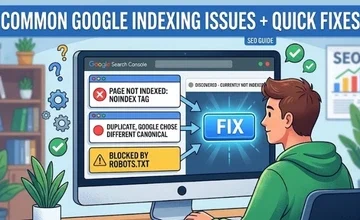
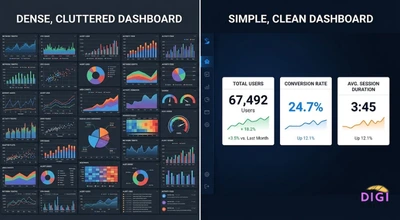
If you have opened three different SEO tools this week and closed all three within a minute because the dashboard looked like a cockpit, you are not doing anything wrong, most SEO software is simply not built with a beginner in mind.
This guide compares the best SEO tools for beginners in 2026, what each one actually costs, and which one to start with first, so you can begin doing real SEO work instead of just staring at tabs.
Why Tools Matter Once You Understand the Basics
Tools do not replace understanding SEO fundamentals, they help you act on them faster. If you have not already read our guide to what SEO actually is, it is worth starting there, since the tools below are only useful once you know what you are actually trying to check or fix.
Once the basics make sense, the right tool turns a vague goal like “improve my rankings” into something concrete, a list of keywords to target, a specific technical issue to fix, or a page that is losing traffic and needs attention.
What to Look For as a Complete Beginner
As a beginner, prioritize tools with a genuinely usable free tier, a simple interface, and clear explanations rather than raw data dumps. Advanced features like historical backlink depth or enterprise reporting matter far less right now than being able to open a tool and actually understand what it is telling you.
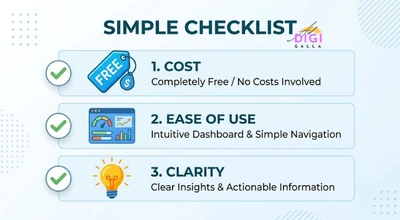
It also helps to accept that you will not need every tool at once. Most beginners are better served by two or three tools used consistently than five tools opened once and abandoned.
Google Search Console: The One Free Tool Every Site Needs
Google Search Console is Google’s own, completely free tool for monitoring how your site actually appears in search results, including which queries bring in clicks, which pages are indexed, and which pages have crawl or indexing problems. If pages on your own site are not showing up in search at all, our guide to common Google indexing issues walks through how to diagnose that using this exact tool.
This is the one tool on this list with no real alternative. Every other tool on here is optional depending on your goals, but Search Console should be set up on day one for any site you own.
Google Keyword Planner: Best Free Keyword Research Starting Point
Google Keyword Planner, accessible free through a Google Ads account even without running any ads, shows search volume ranges and related keyword ideas sourced directly from Google’s own data. It is a reasonable first stop for understanding roughly how many people search for a given phrase before you invest time writing content around it.
The main limitation is that free access shows volume in broad ranges rather than exact numbers, which is a fair trade for a genuinely free, first-party data source.
Rank Math: Best WordPress On-Page SEO Plugin
Rank Math is a WordPress plugin that handles on-page SEO directly inside your dashboard, title tags, meta descriptions, schema markup, and basic content scoring as you write. The free version covers most of what a beginner needs. Paid tiers start at €7.99 a month for the Pro plan on unlimited personal sites, moving up to €24.99 a month for the Business plan and €54.99 a month for Agency, based on pricing verified directly against Rank Math’s own pricing page as of July 2026.
If you are setting up on-page SEO for the first time, our on-page SEO guide for beginners covers the fundamentals this plugin is designed to help you apply.
Google Trends: Best for Spotting Rising Topics
Google Trends is a free tool for comparing how interest in a topic or keyword has changed over time and spotting rising searches before they peak. It will not give you exact search volume, but it is genuinely useful for deciding what to write about next, particularly for seasonal or trending topics.
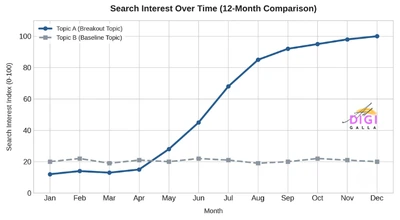
Beginners often overlook this tool entirely, which is a missed opportunity, since it takes seconds to check and can meaningfully shape what you publish next.
Ubersuggest: Best Budget-Friendly All-in-One Option
Ubersuggest, built by Neil Patel, bundles keyword research, basic site audits, and rank tracking into one relatively approachable dashboard. Its entry-level pricing has been reported quite differently across sources, some cite an Individual plan starting around $12 a month, others cite a similar plan starting closer to $29 a month, which suggests the pricing has shifted or varies by promotion and region. Rather than quote a single figure that may already be out of date, it is worth checking Ubersuggest’s current pricing directly before comparing it against other tools on this list.
Its main appeal for a beginner is a simpler interface than most enterprise-grade competitors, at a lower cost than tools built primarily for agencies.
Ahrefs: Best Tool to Grow Into as You Advance
Ahrefs offers a genuinely free tier, Ahrefs Free, for checking backlink and site audit data on sites you personally own and verify. Its lowest paid tier, Starter, launched in January 2026 at $29 a month, giving limited access to Site Explorer and Keywords Explorer, based on pricing verified directly against Ahrefs’ own pricing page and help center by TrackSEO in July 2026. Higher tiers climb quickly from there, Lite starts at $129 a month.
Ahrefs is not the first tool most beginners should buy, but it is worth knowing about early, since it is where many small businesses eventually graduate to once they need deeper competitor and backlink data.
New to a Marketing Team Rather Than Starting Solo?
If you’re a marketer new to an agency or team rather than a solo blogger, the priority shifts slightly, you’ll likely need to learn your organization’s existing tool stack, often Semrush or Ahrefs, which we cover in detail in our own Semrush review, rather than choosing tools freely. The fundamentals in this guide still apply even when you don’t get to pick the tools yourself, since understanding what each tool is actually for makes you productive faster in any stack.
Best SEO Tools for Beginners: A Simple Starter Stack
If you want the shortest possible starting point, set up Google Search Console and Google Keyword Planner first, both free, both directly from Google. If your site runs on WordPress, add Rank Math next for on-page SEO. Only once you have used those consistently for a few months does it make sense to consider a paid tool like Ubersuggest or Ahrefs for deeper keyword and competitor research.
None of these is objectively the best SEO tool for beginners in every case. The right starting stack depends on your platform, your budget, and how much of the work you are doing yourself versus outsourcing.
A Hypothetical Example: Building a Beginner’s Toolkit
To make this concrete, here is a hypothetical example based on patterns commonly seen in this kind of learning process, not a real client case.
Imagine someone starting a WordPress blog with no SEO experience. In the first month, they set up Google Search Console and install Rank Math, using the free versions of both to fix basic on-page issues and confirm their pages are actually getting indexed. In months two and three, they start using Google Keyword Planner and Google Trends before writing each new post, rather than guessing at topics.
A person following this kind of approach would typically only consider a paid tool like Ubersuggest once they have a working understanding of what keyword data and site audits are actually telling them, usually a few months in, rather than buying a paid tool in week one before knowing what to do with it. This is illustrative only, and the right pace depends entirely on how much time you can dedicate to learning.
Common Mistakes Beginners Make With SEO Tools
Buying a paid tool before understanding what its data means. A dashboard full of unfamiliar metrics does not help if you cannot yet interpret keyword difficulty scores or backlink quality.
Checking a tool once and never returning to it. SEO tools are only useful with consistent use, checking Search Console monthly tells you far more than checking it once and forgetting about it.
Chasing every feature in a tool instead of the two or three that matter most right now. Most beginners only need keyword research and basic site health checks at first, not advanced competitor gap analysis.
Frequently Asked Questions
- What are the best SEO tools for beginners in 2026?
Google Search Console and Google Keyword Planner are the essential free starting points for any beginner. Rank Math suits WordPress users specifically, and Ubersuggest or Ahrefs are worth considering once you are ready to invest in deeper keyword and competitor research.
- Are there any completely free SEO tools?
Yes. Google Search Console, Google Keyword Planner, Google Trends, and the free version of Rank Math are all genuinely usable at no cost, and Ahrefs offers a free tier for checking data on sites you personally own.
- Do I need a paid SEO tool to start?
No. A beginner can make real progress for months using only free tools. A paid tool becomes more useful once you have a working understanding of SEO basics and specific gaps those free tools cannot fill, like deeper competitor backlink data.
- Is Ahrefs too advanced for a beginner?
Ahrefs is built for depth rather than simplicity, so it is not the easiest starting point. Its free tier is genuinely useful for checking your own site, but the paid tiers are usually a better fit once you have some SEO experience already.
- What SEO tool should I use if my site is on WordPress?
Rank Math is a strong starting point for WordPress specifically, since it handles on-page SEO directly inside your dashboard without needing a separate tool for basic optimization tasks.
Final Thoughts
The best SEO tools for beginners are rarely the most powerful ones on the market. They are the ones you will actually open and use consistently, starting with free, first-party tools from Google before adding anything paid.
If you want hands-on help setting up your SEO foundation properly, DigiAdGalla works with businesses across Delhi NCR on everything from technical setup to ongoing strategy. You can see our search engine optimization services or get in touch to talk through where you actually are in this process.