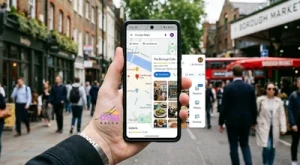
Most local businesses treat their Google Business Profile like a digital visiting card, fill in the name, address, and phone number, add a few photos, and move on, when the profiles that actually win the local pack are built deliberately around how Google’s local ranking system actually works.
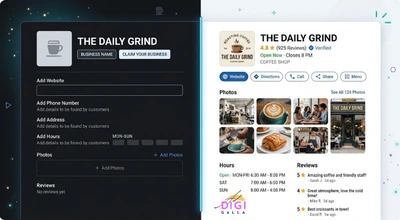
This guide covers what Google Business Profile optimization actually involves in 2026, the specific factors that move the needle most, and a step-by-step process, with every ranking claim sourced back to real, current research rather than guesswork.
Why Google Business Profile Optimization Matters More Than Ever
A Google Business Profile is no longer just a listing, it is often the first and only impression a nearby customer forms of a business before deciding whether to visit, call, or keep scrolling. As Google Maps and AI-powered search results increasingly pull directly from profile data, an incomplete or outdated profile is a real, ongoing cost, not a minor gap.
If you have not already read our guide to local search intent, it is worth understanding what people are actually searching for locally before optimizing the profile that needs to answer those searches.
The Ranking Factors That Actually Matter, in Order
Google has confirmed three core local ranking factors: relevance, distance, and prominence. Beyond that official framing, the closest thing local SEO has to a shared, evidence-based reference point is Whitespark’s 2026 Local Search Ranking Factors survey, an annual study where 47 local SEO practitioners score 187 individual ranking factors based on real-world testing and data, a figure confirmed directly on Whitespark’s own published report and independently corroborated by AdviceLocal’s coverage of the same 2026 survey.
Proximity to the searcher is generally considered the single largest of the three core factors, and it is also the one you cannot directly control, which is exactly why the sections below focus specifically on the profile signals you can actually influence.
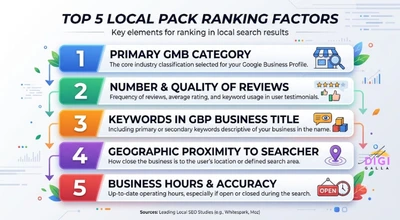
According to that 2026 survey, your primary GBP category is the single most important individual local pack ranking factor, ahead of reviews and links. Keywords in your business title rank third, and whether your business is actually open at the moment someone searches ranks fifth. Profile signals overall, the things you directly control inside your Google Business Profile, account for roughly a third of total local pack ranking weight, with eight of the top ten individual factors coming directly from the profile itself.
Step 1: Choose Your Primary Category Correctly
Your primary category should be the single most specific match for your core service, not a broad umbrella term. A plumber who specializes in emergency callouts should select the most specific category available rather than a generic “Plumber” listing, since Google offers thousands of category options and a precise choice competes against a far smaller, more relevant set of other businesses.
This single decision carries more ranking weight than almost anything else on the profile, according to the Whitespark data above, which makes it worth genuinely researching rather than picking the first reasonable-sounding option during setup.
Step 2: Complete Every Section, Especially Hours
Every field left blank is a missed signal, and one field in particular deserves specific attention: business hours. Whitespark’s 2026 survey ranks being open at the moment someone searches as the fifth most important local pack factor, and Google’s own systems actively check this in real time, a listing marked closed loses visibility at exactly the moment a searcher has the highest intent to visit or call.
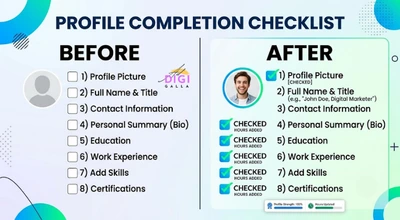
Beyond hours, fill in your website URL, phone number, service area, attributes, and the Services section completely. None of these individually carries the weight of the primary category, but together they form a meaningful share of the completeness signal Google’s ranking system evaluates.
Step 3: Add Photos Consistently
Photos are one of the fastest, lowest-effort wins available on a Google Business Profile. Businesses with photos have historically seen roughly 35% more website clicks and 42% more direction requests than profiles without them, a figure that traces back to a Google-published 2014 study and has since been widely repeated, though Google has since removed it from its current help documentation. The underlying principle, that photos meaningfully influence customer action, is still consistently supported by more recent local SEO research even if this specific decade-old figure shouldn’t be treated as a live current statistic.
Keep photos genuinely representative of the business, in focus, well lit, and unfiltered, rather than relying purely on stock imagery. Adding new photos periodically also signals an active, maintained profile rather than one set up once and abandoned.
Step 4: Manage Reviews as an Ongoing Practice
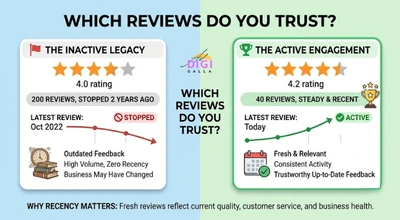
Reviews matter meaningfully to local ranking, but they show up further down the ranking factor list than a lot of marketing content implies, behind category, title keywords, and hours in the 2026 Whitespark data. What the data does show clearly is that recency and consistency matter more than raw volume, a business with 40 recent, detailed reviews will generally outperform one with 200 reviews that stopped coming in two years ago.
Respond to reviews, both positive and negative, as a routine practice rather than an occasional task. A thoughtful response to a negative review often matters more to a prospective customer reading it later than the original complaint itself, since it demonstrates how the business actually handles problems. This is ongoing work rather than a one-time project, similar to how our local SEO services approach it as a continuous part of a business’s local visibility, not a setup step you complete once.
Step 5: Use Posts and the Services Section Actively
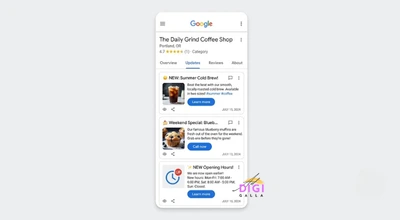
Google Business Profile Posts let you share updates, offers, and announcements directly on your listing, and a profile that posts periodically signals ongoing activity in a way a static, unchanged listing does not. Keep posts genuinely useful rather than purely promotional, a specific update, a seasonal note, or a real offer performs better than generic filler content posted purely to hit a schedule.
The Services section deserves the same care as your primary category. Google increasingly cross-references the service descriptions on your actual website against what is listed in your profile’s Services tab, so keeping these consistent with each other, not just complete on their own, is worth checking specifically.
Common Google Business Profile Optimization Mistakes
Choosing a broad category to “cover more searches.” A vague category like “Contractor” competes with every contractor in the area, while a precise one like “Emergency Plumber” competes with a far smaller, more relevant set of listings, and ranks better for the searches that actually matter to that business.
Setting up the profile once and never returning to it. Hours go stale, photos age, and posts stop, all of which work against the completeness and activity signals covered above.
Ignoring service-area accuracy for a business that serves a wide region. You can list multiple service areas on a single profile, but a business without a real, findable physical presence in a distant city will not meaningfully rank there just by listing it as a service area.
Letting inconsistencies build up between the website and the profile. If your website describes services or hours differently from what your Google Business Profile lists, that mismatch is worth fixing specifically, since Google increasingly cross-references the two when evaluating relevance.
A Hypothetical Example: Optimizing a Local Business Profile
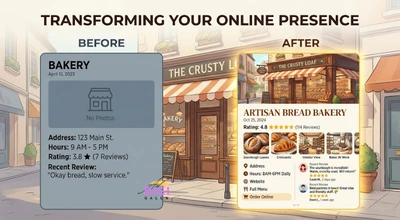
To make this concrete, here is a hypothetical example based on patterns commonly seen in this kind of optimization work, not a real client case.
Imagine a local bakery whose Google Business Profile was set up years ago under a generic “Bakery” category, with outdated hours and only three photos. A business in this position would typically start with the two highest-leverage fixes first, correcting the primary category to something more specific if one genuinely fits better, and updating hours to reflect reality exactly, before moving on to lower-leverage work like adding more photos.
A team following this kind of approach would typically treat reviews and regular posting as ongoing habits to build from that point forward, rather than a one-time cleanup, since the ranking factors most influenced by consistency, reviews and profile activity, reward sustained effort over time rather than a single burst of setup work. This is illustrative only, and the right priority order depends on your own profile’s specific current gaps.
Frequently Asked Questions
- What is the single most important factor in Google Business Profile optimization?
According to Whitespark’s 2026 Local Search Ranking Factors survey of 47 local SEO practitioners, your primary GBP category is the single most important individual local pack ranking factor, ahead of reviews and links.
- How many reviews do I need to rank well locally?
There is no fixed number that guarantees ranking. Recency and consistency matter more than raw volume, a smaller number of recent, detailed reviews tends to outperform a larger number that stopped coming in years ago.
- Do photos actually affect Google Business Profile rankings?
They affect customer behavior meaningfully. A widely-cited figure (originally from a 2014 Google-published study, though no longer in Google’s current documentation) put the gap at roughly 35% more website clicks and 42% more direction requests for profiles with photos, and profile completeness and activity, which photos contribute to, remain factors Google’s local ranking system does weigh.
- How often should I post updates on my Google Business Profile?
There is no universal frequency, but posting periodically, tied to genuine updates, offers, or seasonal notes, signals an active, maintained profile, which is preferable to either going silent for months or posting generic filler purely to hit a schedule.
- Can a business rank in a city it does not have a physical location in?
Generally, no, not meaningfully. Proximity remains a foundational ranking factor, and while you can list service areas beyond your physical location, a business without a genuine, findable presence in a distant city is unlikely to rank well there through service-area listing alone.
Final Thoughts
Google Business Profile optimization comes down to a small number of things done properly and maintained consistently, the right primary category, complete and accurate information, especially hours, genuine photos, and reviews and posting treated as ongoing habits rather than a one-time setup task.
If you want hands-on help optimizing and maintaining your Google Business Profile, DigiAdGalla works with businesses across Delhi NCR on the full local visibility picture. You can see our Google Business Profile optimization and management services or get in touch to talk through what your profile actually needs.