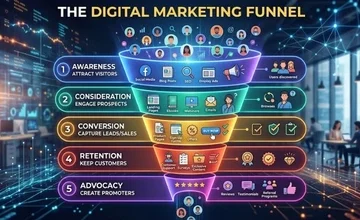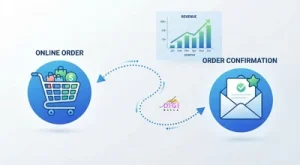
A generic newsletter and genuine email marketing for ecommerce are not the same thing, an online store’s email program should mostly run itself, triggered by what a specific customer just did, rather than depending on someone remembering to hit send every week.
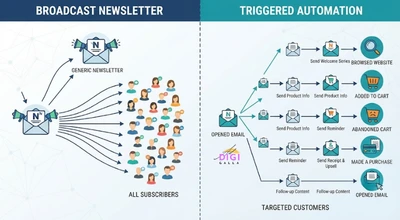
This guide covers the core email flows every ecommerce store needs, how to segment your list properly, and real, sourced benchmarks, not the inflated numbers that circulate in a lot of ecommerce marketing content.
Why Email Marketing Works Differently for Ecommerce
For most businesses, email marketing is about staying top of mind. For an ecommerce store, it is closer to a direct revenue channel, since email can be triggered by specific, high-intent actions, adding an item to a cart, completing a purchase, browsing a product without buying, in a way a generic newsletter never captures.
This connects to a point we make in why traffic alone never grows a business, the visitors your marketing already brings in are often more valuable to recover through email than the effort spent finding new ones. If SEO is also part of your store’s growth plan, our e-commerce SEO guide covers that other half of the picture.
The Core Email Flows Every Ecommerce Store Needs
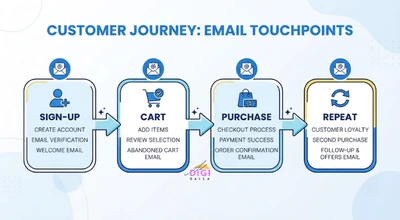
Most of an ecommerce store’s email revenue comes from a small number of automated flows rather than one-off promotional blasts: a welcome series for new subscribers, an abandoned cart sequence, post-purchase emails, and win-back emails for customers who have gone quiet. The sections below cover each of these individually.
Welcome Series: Your First and Best Opportunity
A new subscriber is at their most engaged in the first few days after signing up, which makes the welcome series one of the highest-performing flows a store can set up. A simple three-email sequence, an immediate welcome with a clear next step, a brand or product story a day or two later, and a gentle nudge toward a first purchase, covers most of what this flow needs to do.
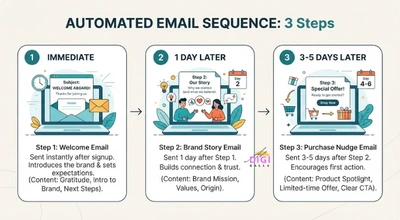
Avoid making every welcome email a discount offer. A welcome series that leads entirely with “10% off” trains subscribers to wait for a deal rather than building any real connection to the brand first, and it also compresses your margin on exactly the customers who might have bought at full price anyway. Reserve the discount, if you use one at all, for the final email in the sequence rather than the first.
Abandoned Cart Emails: What the Real Numbers Show
Cart abandonment is a genuinely large problem, not a minor one. According to the Baymard Institute’s meta-analysis of 49 separate studies, the average online cart abandonment rate sits at just over 70%, meaning roughly seven out of ten shoppers who add something to a cart never complete the purchase.
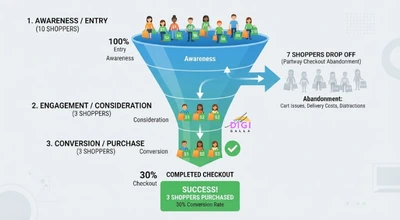
Recovery email performance is where a lot of ecommerce content gets sensational, with some sources citing implausibly high recovery rates. The more credible figure, drawn from Klaviyo’s own aggregated benchmark data across more than 183,000 active ecommerce brands, puts the average conversion rate for abandoned cart emails at 3.33%, generating an average of $3.65 in revenue per recipient. That is a genuinely strong number for a single automated email, it does not need to be inflated further to be worth setting up.
Timing matters more than most stores realize. A cart abandonment email works best sent within the first hour or two after someone leaves, with a short follow-up sequence over the next few days rather than a single message.
Post-Purchase Emails: The Most Underused Flow
Most stores stop emailing the moment someone becomes a customer, which is a missed opportunity, since a recent buyer is one of the easiest people to sell to again. An order confirmation, a shipping update, and a follow-up asking for a review or offering a related product a week or two after delivery cover the basics of this flow.
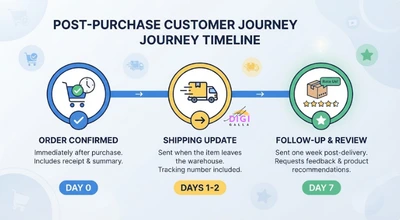
This is also where product recommendations genuinely earn their place, suggesting something that complements a recent purchase feels helpful rather than pushy, in a way a cold promotional email to the same customer would not. Asking for a review at the right moment, once the product has actually arrived and had time to be used, also builds the kind of social proof that helps convert future undecided visitors.
Win-Back Emails: Re-engaging Before You Lose a Customer
A win-back flow targets customers who have gone quiet, typically triggered after 60 to 90 days without a purchase or open, depending on your store’s typical repeat-purchase cycle. A simple “we miss you” message, sometimes paired with a modest incentive, often recovers a meaningful share of an otherwise inactive list.
A two or three-email approach tends to work better than a single attempt, a check-in message first, followed a few days later by a slightly stronger nudge if there is still no response. Keep the tone genuinely curious rather than guilt-driven, asking what changed or what they are looking for tends to land better than a message that implies the customer did something wrong by not buying again.
Sending a win-back sequence also protects your sender reputation. Continuing to email addresses that never engage drags down deliverability for your entire list, so removing or suppressing genuinely unresponsive subscribers after a win-back attempt fails is a healthy, ongoing practice rather than a one-time cleanup.
Segmentation: Sending Fewer, More Relevant Emails
Segmentation means sending different messages to different groups of subscribers based on what you actually know about them, past purchase category, how recently they bought, or how engaged they have been with previous emails, rather than sending the exact same broadcast to your entire list every time.
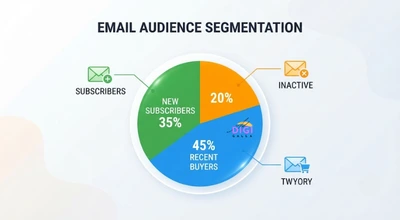
A smaller, well-segmented send to people who are actually likely to care tends to outperform a larger, generic blast, both in engagement and in protecting your sender reputation over time, since consistently low engagement from a broad send can hurt future deliverability.
Choosing a Tool for This
Most of what this guide covers, welcome series, abandoned cart flows, post-purchase sequences, and segmentation, depends on picking a platform with genuine e-commerce automation rather than a basic newsletter tool. We already compared the specific platforms that handle this well, including Klaviyo’s e-commerce-specific automation, in our guide to email marketing tools for small business, this guide focuses on the strategy itself rather than re-covering that ground.
A Hypothetical Example: Building a First Flow Set
To make this concrete, here is a hypothetical example based on patterns commonly seen in this kind of setup, not a real client case.
Imagine a small online store that has only ever sent occasional promotional blasts with no automated flows at all. A store in this position would typically start with the two highest-impact flows first, a welcome series and an abandoned cart sequence, rather than trying to build all four core flows simultaneously.
A team following this kind of approach would typically wait until those two flows are live and stable before adding post-purchase and win-back sequences, since a smaller number of well-built flows tend to outperform a large number of rushed ones. This is illustrative only, and the right sequence to build first depends on your own store’s specific customer behavior and current gaps.
Common Mistakes in Ecommerce Email Marketing
Sending only promotional broadcasts with no automated flows. As covered throughout this guide, triggered flows like abandoned cart and post-purchase emails typically outperform one-off blasts, since they are sent at the exact moment a customer’s intent is highest.
Leading every email with a discount. Constant discounting trains subscribers to wait for a deal before buying, which erodes full-price sales over time and is worth reserving for genuinely occasional use rather than a default tactic.
Never cleaning an inactive list. Continuing to send to subscribers who have not opened an email in months drags down deliverability for everyone else on the list, a periodic win-back attempt followed by suppression protects the health of the list overall.
Frequently Asked Questions
- What is the most important email flow for an ecommerce store to set up first?
A welcome series and an abandoned cart sequence typically deliver the most value for the least setup effort, since both are triggered by high-intent actions, a new signup or an added-to-cart item, rather than requiring you to guess at timing.
- How effective are abandoned cart emails really?
Based on Klaviyo’s own aggregated benchmark data across a large sample of active ecommerce brands, abandoned cart emails convert at an average of 3.33%, generating roughly $3.65 in revenue per recipient, a genuinely strong return for a single automated email.
- How often should an ecommerce store send promotional emails?
There is no universal number, it depends on your audience and product cycle, but sending consistently while watching unsubscribe and complaint rates closely is a better guide than following a fixed frequency purely because a competitor uses it.
- Should every ecommerce email include a discount?
No. Leading every email with a discount trains subscribers to wait for deals rather than buying at full price, most email flows, especially welcome and post-purchase sequences, work better built around genuine value or product information first.
- What tool should I use for ecommerce email marketing?
This depends on your platform and needs, our separate guide to email marketing tools for small business compares specific options, including Klaviyo’s e-commerce-focused automation, in more depth.
Final Thoughts
Email marketing for ecommerce works best as a small set of well-built, automated flows triggered by real customer behavior, rather than a weekly newsletter sent to everyone regardless of what they have actually done. Get the welcome series and abandoned cart flow genuinely working first, everything else builds on that foundation.
If you want help setting up a real ecommerce email strategy rather than another generic newsletter, DigiAdGalla works with businesses across Delhi NCR on the full picture from traffic through repeat purchases. You can see our services page or get in touch to talk through what your store actually needs.