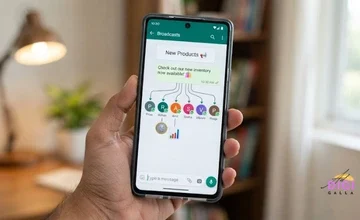
If you are still emailing customers one at a time from your personal inbox, or copy-pasting the same message to a long BCC list, the tools in this guide will save you hours every single week.
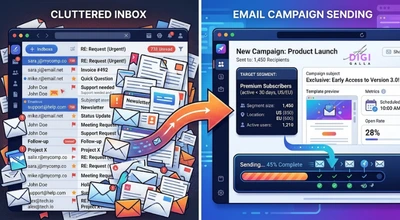
This guide compares six email marketing tools for small business use in 2026, what each one actually costs as of this writing, and who genuinely fits each one, so you can choose without wasting a month on the wrong platform.
Why Email Still Earns Its Place in a Small Business’s Marketing
It is easy to assume email marketing is old news next to social media and paid ads, but it remains one of the few channels you actually own. A social platform can change its algorithm overnight and cut your reach, but a list of people who opted in to hear from you directly stays yours.
This connects closely to why traffic alone never grows a business, a visitor who leaves your site without becoming an email subscriber is a much harder person to bring back than one who is now getting a monthly note from you. Email also sits naturally inside the digital marketing funnel, turning one-time visitors into repeat customers over time.
What to Check Before You Compare Any Tool
Before comparing specific platforms, get clear on three things: roughly how many contacts you have today and expect to have in a year, whether you need e-commerce-specific automation like abandoned cart emails, and how much hands-on support you want if something breaks.
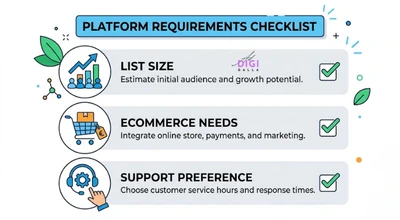
Also pay attention to how each tool actually prices itself. Some charge by the number of contacts you store, others by how many emails you send each month, and that difference alone can make one tool dramatically cheaper than another for the exact same business.
Mailchimp: Best All-Round Starting Point
Mailchimp offers a free plan, though it was reduced in early 2026 to 250 contacts and 500 emails a month. Paid plans start at the Essentials tier for roughly $13 a month at 500 contacts, moving up to Standard at around $20 a month, which is where multi-step automation unlocks, according to pricing tracked by Retainful, verified against Mailchimp’s own pricing page.
Mailchimp remains a reasonable starting point mainly because almost every other tool and integration supports it by default, though its free tier has grown noticeably less generous over the past couple of years.
Constant Contact: Best for Businesses That Want Phone Support
Constant Contact has three paid tiers, Lite at around $12 a month, Standard at around $35 a month, and Premium at around $80 a month, all priced at a base of 500 contacts, based on pricing tracked by SendX, sourced from Constant Contact’s own pricing page. There is no permanent free plan, only a free trial.
Constant Contact tends to appeal to small businesses and nonprofits that value phone support and a platform that has been around since well before most of its competitors existed.
ActiveCampaign: Best for Deeper Marketing Automation
ActiveCampaign’s Starter plan begins at around $15 a month for 1,000 contacts on annual billing, with no permanent free plan, only a 14-day trial, according to pricing verified against ActiveCampaign’s own pricing page by SaaS CRM Review. Higher tiers add deeper automation branching, a built-in CRM, and significantly more contacts and users.
This tool suits small businesses that want to build genuinely sophisticated automated sequences, welcome flows, lead scoring, behavior-based triggers, rather than sending simple one-off newsletters.
Klaviyo: Best for Ecommerce Stores
Klaviyo offers a free plan for up to 250 profiles and 500 monthly email sends, with paid plans starting at around $20 a month for 500 contacts, based on pricing verified against Klaviyo’s own pricing page by Retainful.
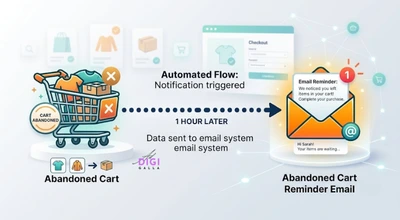
Klaviyo is built specifically around e-commerce behavior, abandoned carts, post-purchase flows, and purchase-based segmentation, which makes it a strong fit if you run an online store. If SEO for your store is also on your radar, our e-commerce SEO guide covers the other half of that growth picture.
Brevo: Best for Businesses That Send Rarely to a Large List
Brevo, formerly known as Sendinblue, prices itself by monthly email volume rather than contact count, with a free plan covering 300 emails a day and paid plans starting at around $9 a month for lower send volumes, based on figures reported by saascrmreview.com. Its exact tier names and prices have shifted more than once over the past year, so it is worth confirming current numbers directly on Brevo’s own pricing page before committing.
This pricing model favors a business with a large contact list that emails infrequently, since you are charged for what you send, not how many people you store.
MailerLite: Best for Simplicity on a Tight Budget
MailerLite offers a free plan and an entry paid tier historically priced around $10 a month, though its plan names and free-tier subscriber limits have changed more than once in the past year, based on multiple pricing trackers including Mailsoftly’s MailerLite breakdown. As with Brevo, it is worth checking MailerLite’s current pricing page directly rather than relying on any single article, including this one, for the exact current numbers.
MailerLite tends to suit solo founders and small teams who want a clean, simple editor without a steep learning curve.
Email Marketing Tools for Small Business: A Side-by-Side Snapshot
If you are choosing quickly, the shorthand version looks like this: pick Mailchimp if you want the most widely supported starting point, Constant Contact if you want phone support and platform maturity, ActiveCampaign if you need deep automation, Klaviyo if you run an e-commerce store, Brevo if you have a large list you email infrequently, and MailerLite if you want the simplest possible editor on a tight budget.
None of these is objectively the best email marketing tool for small business use in every case. The right one depends on your list size, how you plan to use automation, and whether e-commerce behavior matters to your business.
A Hypothetical Example: Choosing a Tool as a List Grows
To make this concrete, here is a hypothetical example based on patterns commonly seen in this kind of decision, not a real client case.
Imagine a small home goods store that started collecting email signups through a simple pop-up on its website. In the first few months, a free-tier tool handled the list comfortably, sending a monthly newsletter to a few hundred people. As the store grew and started running promotions tied to abandoned carts and post-purchase follow-ups, the free plan’s automation limits became the bottleneck, not the list size itself.
A business in this position would typically move to a paid, e-commerce-oriented tool once behavior-based automation, not just contact count, becomes the actual constraint. This is illustrative only, and the right moment to upgrade depends on your own store’s traffic, list growth, and how much of your revenue already comes from repeat customers.
Common Mistakes Small Businesses Make With Email Marketing
Choosing a tool based on price alone before checking whether it actually supports the automation you need. A cheaper contact-based plan can end up costing more once you factor in the workarounds needed to replicate features a pricier tool includes by default.
Letting a list sit unused for months. An email list you never email loses engagement over time, which can hurt deliverability once you do start sending again.
Sending every email to your entire list regardless of relevance. Sending the same promotion to everyone, instead of segmenting by purchase history or interest, tends to produce lower open rates and more unsubscribes over time.
Frequently Asked Questions
- What are the best email marketing tools for small business in 2026?
There is no single best option for every business. Mailchimp suits general use, Constant Contact suits businesses wanting phone support, ActiveCampaign suits deep automation needs, Klaviyo suits e-commerce stores, and Brevo and MailerLite suit tighter budgets.
- Is there a genuinely free email marketing tool for small businesses?
Yes. Mailchimp, Klaviyo, Brevo, and MailerLite all offer real free tiers as of 2026, though each comes with limits on contacts, sends, or features that typically require a paid upgrade as your list and needs grow.
- How much does email marketing software cost for a small business?
Entry-level paid plans generally start somewhere between $9 and $20 a month across the tools covered here, though exact pricing changes fairly often, so it is worth checking each vendor’s current pricing page before deciding.
- Is Klaviyo worth it for a small ecommerce store?
For a store already generating consistent online sales, Klaviyo’s e-commerce-specific automation, like abandoned cart and post-purchase flows, often earns back its cost through recovered sales. For a very early-stage store with minimal traffic, a simpler, cheaper tool may make more sense until volume picks up.
- Do I need marketing automation, or is a simple newsletter tool enough?
It depends on your business. A service business sending an occasional newsletter may never need much automation, while a store or business with a clear customer journey, signup, purchase, follow-up, usually benefits from at least basic automated sequences.
Final Thoughts
The best email marketing tool for small business use is rarely the one with the longest feature list. It is the one priced in a way that matches how you actually send, whether that is by contact count or email volume, and that supports the specific kind of automation your business needs, not every automation a vendor can build.
If you want help connecting your email marketing to the rest of your funnel, DigiAdGalla works with businesses across Delhi NCR on the full picture from traffic through follow-up. You can also see how we think about tool choice more broadly in our comparison of the best CRM options for small business, or get in touch to talk through what would actually fit your business.