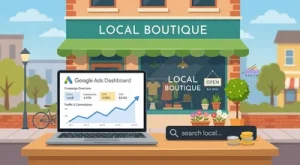
Google Ads for small business often gets written off after one bad campaign, but most small businesses that try it once and give up did not fail because the platform does not work, they failed because they launched with no budget plan, no conversion tracking, and no realistic sense of what a click actually costs in their industry.
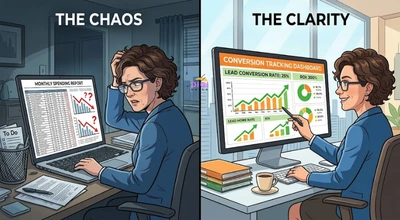
This guide covers how Google Ads actually works for a small business, what it really costs in 2026, and the specific mistakes that waste the most budget, with every figure sourced.
Why Google Ads for Small Business Works So Well
Unlike most advertising, Google Ads targets people actively searching for what you sell, right at the moment they are looking for it. This is fundamentally different from SEO, which we cover in our guide to what SEO actually is. Google Ads buys immediate visibility while SEO builds it gradually over time, and most small businesses benefit from using both rather than choosing one over the other.
For a small business specifically, this means you are not competing purely on brand recognition against larger competitors, you are competing on relevance and how well your ad and landing page answer the exact search someone just typed.
How Google Ads Pricing Actually Works
Google Ads runs on an auction, but the highest bidder does not automatically win. Google combines your bid with a Quality Score, based on expected click through rate, ad relevance, and landing page experience, to decide both your ad’s position and what you actually pay per click. A business with a lower bid but a genuinely relevant ad and landing page can pay less per click than a competitor bidding higher with a weaker match.

This is genuinely good news for a small business with a limited budget, a tightly targeted campaign with a relevant landing page can outperform a bigger competitor’s broader, less focused one, rather than losing purely on budget size.
What Google Ads Actually Costs in 2026
This is where a lot of Google Ads content gets misleading, quoting a single “average CPC” without explaining how much that number varies. According to LocaliQ’s 2026 Search Advertising Benchmarks report, based on 13,474 US search campaigns across 23 industries, the average cost per click across all industries is $5.42, up from $5.26 the year before. Industry variation is significant, from $1.63 in arts and entertainment up to roughly $9.87 in legal services, according to figures reported by Superscale’s CPC benchmark breakdown, which also references the same LocaliQ data.
It is worth understanding the difference between an average and a median here specifically. Databox’s live benchmark tracker, drawn from more than 4,700 companies and cited in that same Superscale breakdown, shows a median CPC of around $1.53 as of mid 2026, meaningfully lower than the $5.42 average, because a small number of expensive industries, legal, insurance, financial services, pull the average up disproportionately. If your own CPC looks nothing like the $5.42 headline figure, that is expected, not a sign something is wrong.
One important caveat for a Delhi NCR audience specifically: these benchmark figures are drawn from US advertising data. Actual costs per click in the Indian market are generally lower across most industries, so treat these US figures as a reference for understanding the auction dynamics and industry spread, not as a direct estimate of what you will pay in India.
The Main Campaign Types to Know
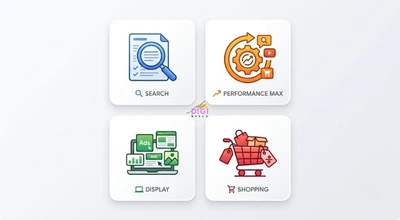
Search campaigns show text ads on Google’s own search results, ideal for capturing existing demand from people actively searching for what you offer.
Performance Max campaigns have become one of the dominant campaign types on the platform, running ads automatically across Search, Display, YouTube, and Gmail from a single campaign, using Google’s automated bidding to find conversions across all of these placements. This automation trades some manual control for broader reach and typically requires 30 or more conversions of history before its bidding stabilizes and becomes reliably efficient.
Display and Shopping campaigns serve more specific purposes, Display for visual brand awareness at a lower cost per click, and Shopping specifically for e-commerce businesses wanting to show product listings with images and prices directly in search results.
For a brand new small business account with no conversion history yet, Search campaigns are generally the safer starting point, since they give you the clearest, most direct read on which specific keywords are actually working before you hand more decisions over to automated bidding.
Setting a Realistic Budget as a Small Business
Commonly cited budget guidance across industry sources suggests a small business should generally budget at least $500 to $1,500 a month to gather meaningful performance data, with more competitive markets often requiring $2,000 to $5,000 a month for sustainable lead generation. This specific range reflects the US market referenced in that source, an Indian small business’s realistic entry budget is typically lower in absolute terms, though the underlying principle, that too small a budget produces too little data to optimize from, holds regardless of currency.
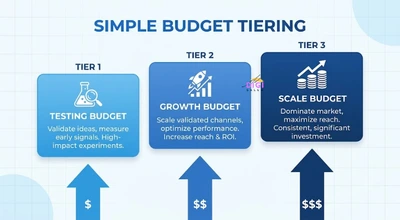
The practical rule: whatever your starting budget is, treat the first few weeks as data collection rather than expecting immediate profitability, since Smart Bidding and Performance Max specifically need a real volume of conversions before they optimize effectively.
Conversion Tracking: The Step Most Small Businesses Skip
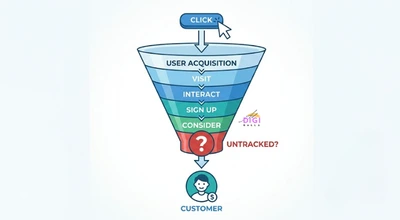
This is the single most common reason a Google Ads account underperforms. Without proper conversion tracking, calls, form submissions, purchases, or bookings, actually connected back to Google Ads, both you and Google’s own bidding algorithms are optimizing blind. Smart Bidding and Performance Max specifically rely on conversion data to know which clicks are actually worth pursuing, without it, they are guessing.
Set up conversion tracking before you spend a meaningful budget, not after a few weeks of unclear results. This means tracking every genuine conversion point relevant to your business, a completed contact form, a phone call that lasts long enough to count as a real inquiry, a WhatsApp click, or a completed purchase, rather than only the single most obvious one. If you are also managing where those leads go once they convert, our guide to choosing a CRM for small business covers the other half of that picture, tracking a lead’s value all the way through to an actual sale.
Common Google Ads Mistakes Small Businesses Make
Launching with no landing page built for the campaign. Sending ad traffic to a generic homepage instead of a page that directly matches the ad’s specific offer meaningfully hurts both conversion rate and Quality Score.
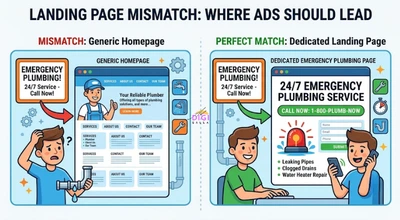
Turning campaigns off too early. Performance Max and Smart Bidding campaigns specifically need a real learning period, judging a campaign’s success in the first week, before it has enough conversion data to optimize, is one of the most common reasons small businesses conclude “Google Ads doesn’t work” prematurely.
Targeting too broad a keyword set from day one. A small budget spread across broad, expensive keywords runs out fast without enough data on any single one, a narrower, more specific starting point usually produces more usable data per dollar spent.
A Hypothetical Example: Launching a First Campaign
To make this concrete, here is a hypothetical example based on patterns commonly seen in this kind of launch, not a real client case.
Imagine a small local service business launching Google Ads for the first time with a modest monthly budget. A business in this position would typically start with a tightly targeted Search campaign around its most specific, highest intent services, rather than a broad Performance Max campaign from day one, since Performance Max’s automated bidding needs conversion history a brand new account does not yet have.
A business following this kind of approach would typically treat the first month primarily as a data gathering period, watching which specific keywords and ads actually produce tracked conversions, before expanding budget or campaign types based on what the early data actually shows, rather than guessing upfront. This is illustrative only, and the right starting approach depends on your specific industry, budget, and conversion goals.
Frequently Asked Questions
- Is Google Ads for small business actually worth it?
For businesses with a genuine, trackable path from a click to a sale or lead, yes, Google Ads captures existing demand at the exact moment someone is searching. It works best alongside proper conversion tracking and a landing page built to match the ad, not as a standalone fix for a weak website.
- How much should a small business spend on Google Ads per month?
There is no universal number, but budgeting at least enough to gather meaningful conversion data, commonly cited starting points run from a few hundred to a couple thousand dollars a month depending on industry and market, matters more than the specific figure itself.
- What is the average cost per click on Google Ads in 2026?
Based on LocaliQ’s 2026 benchmark data, the average is $5.42 across US industries, though the median is meaningfully lower at around $1.53, and costs vary significantly by industry and by market, so treat any single average figure as a rough reference point rather than a direct prediction for your own account.
- Should a small business use Performance Max or Search campaigns?
Search campaigns are generally the better starting point for a brand new account, since Performance Max’s automated bidding needs a real volume of conversion history to work effectively, something a fresh account has not yet built up.
- Why is my Google Ads campaign not converting even though I’m getting clicks?
This is very often a landing page or conversion tracking issue rather than a targeting problem; clicks that land on a generic, unrelated, or untracked page will not show up as conversions even if the underlying interest was genuine.
Final Thoughts
Google Ads for small business works well when you treat it as a system, proper conversion tracking, a landing page that matches the ad, and a realistic budget given time to gather data, rather than a single campaign expected to produce results within the first few days.
If you want help setting up or auditing a Google Ads account that actually tracks and converts properly, DigiAdGalla works with businesses across Delhi NCR on Google and Meta Ads alongside the rest of your marketing. You can also read our guide to choosing a digital marketing agency if you are evaluating whether to run this in house or bring in outside help, or get in touch directly to talk through your specific budget and goals.