Off page SEO is the reason two websites with nearly identical content can rank completely differently, one has spent months earning genuine mentions, links, and citations across the web, and the other has only ever worked on itself.
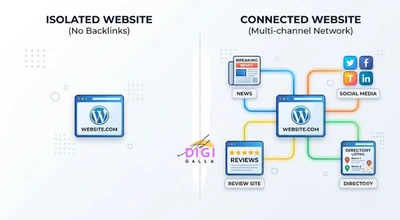
This guide covers what off page SEO actually means in 2026, which tactics still genuinely work, which ones are worth avoiding entirely, and a full step by step framework, with every specific claim sourced.
What Off Page SEO Actually Means
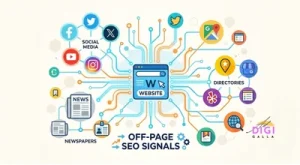
Off page SEO covers everything that happens away from your own website that still influences how search engines see it, backlinks, brand mentions, citations, social engagement, and the broader reputation your site earns across the rest of the web. This sits in direct contrast to on page SEO, which we cover in our on page SEO guide for beginners, on page SEO proves your page is well built, off page SEO proves your brand is actually trusted by people who do not work for you.
That distinction matters more than it sounds. On page signals are ones you control directly, you can edit your own title tag any time you like. Off page signals come from independent third parties, another site choosing to link to you, a journalist mentioning your brand, a customer leaving a review, which is exactly why they carry real weight, they are much harder to fake.
Why Off Page SEO Still Matters in 2026
Some predicted that backlinks and off page signals would fade in relevance as AI driven search grew. That has not happened. Backlinks and other off site signals remain a foundational part of how search engines evaluate a site, and the same signals that build traditional search authority now also shape how often AI systems cite a brand in generated answers, a genuinely new layer of value that did not exist a few years ago.
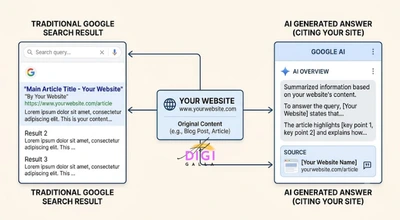
What has changed is not whether off page SEO matters, but which specific tactics still work. Mass directory submissions and private blog networks are firmly in the past, replaced by a focus on links and mentions that are editorially placed, contextually relevant, and genuinely difficult for a competitor to simply copy.
Backlinks: Still the Foundation
Link building remains the single most impactful off page SEO technique. According to Backlinko’s original ranking study, later reported and corroborated by multiple independent trackers, including Webaloha’s link building guide and RankTracker, the page ranking first on Google has on average 3.8 times more backlinks than pages ranking in positions two through ten. The same source notes that a large majority of content published on the web earns no external links at all, meaning even a single genuine, editorially earned backlink puts a page ahead of most of its competition by default.
Quality matters far more than volume here. A single editorial link from a genuinely authoritative, topically relevant site is worth more than dozens of links from low quality, unrelated sources, a pattern confirmed consistently across the independent sources checked for this guide. When evaluating a potential link opportunity, three things matter most: topical relevance to your own site’s subject matter, the linking site’s own genuine authority and traffic, and whether the link sits naturally within real editorial content rather than a sidebar or footer clearly built for link placement.
Anchor text, the clickable words used in the link itself, still carries some weight too, though modern link building rightly treats it as one signal among several rather than something to aggressively engineer, since an unnaturally repetitive anchor text pattern across many links is itself a red flag to spam detection systems.
If you want to check your own site’s current backlink profile before planning a link building push, our guide to free backlinks checker tools covers where to start without spending anything.
Digital PR: The Strategy Most Small Businesses Skip
Digital PR means earning coverage in genuine media outlets and industry publications, usually by pitching original data, a useful tool, or a genuinely newsworthy angle rather than asking for a link directly. This is consistently described across current sources as one of the highest value off page tactics available in 2026, precisely because the resulting links and mentions come from sites competitors cannot simply replicate by paying for a placement.
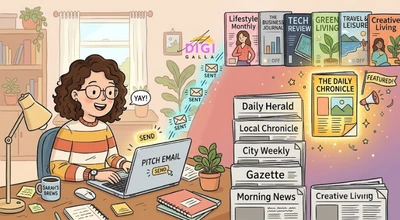
A practical starting point for a small business is original research or data specific to your own industry or local market, something a journalist or industry blogger genuinely has a reason to reference, rather than a generic press release about your own company that nobody outside your business actually cares about. This does not need to be a large scale study, even a small, genuinely original survey of your own customers, or a well organized summary of data you already have internally, can become a legitimate pitch if it tells a story a journalist’s readers would actually find useful.
The pitch itself matters as much as the underlying asset. A short, specific email that clearly states what the data shows and why it matters to that particular publication’s audience gets read far more often than a generic pitch sent identically to a long list of journalists, most of whom will recognize the copy paste approach immediately and ignore it.
Guest Posting Done Right
Guest posting still works in 2026, but the bar has risen considerably. A guest post placed purely to insert a link, on a site with little genuine audience or topical relevance, carries minimal value and can occasionally draw negative attention from search engines’ spam detection systems. A guest post placed on a genuinely relevant, actively read publication, written to actually be useful to that site’s specific audience, remains a legitimate and effective tactic.
The practical test worth applying before pitching any guest post: would this specific piece of content still be worth publishing if it had no link back to your site at all. If the honest answer is no, the placement is not worth pursuing.
Broken Link Building
Broken link building involves finding existing pages elsewhere on the web that link out to a page that no longer exists, then reaching out to suggest your own, genuinely comparable or better resource as a replacement. This tactic has evolved somewhat, current guidance suggests the strongest version of this approach involves finding the best ranking content on a topic, creating something demonstrably more thorough and current, and then reaching out specifically to sites that already link to similar resources, rather than relying purely on broken links alone.
This works because it solves a real, immediate problem for the site owner you are contacting, a broken link on their own page, rather than asking for a favor with no benefit to them.
Unlinked Brand Mention Reclamation
This is one of the most underused off page tactics available to most small businesses. An unlinked mention happens when another site references your brand name by text without actually linking to your website, which still functions as a genuine reputation signal to search engines and AI systems, a pattern known as co occurrence, but does not pass the direct value a real link would.
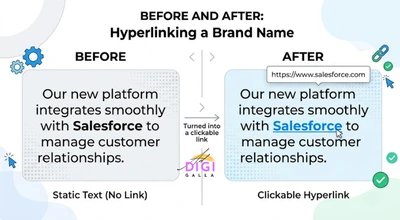
Finding these mentions and reaching out to ask for a link is usually a fast, low friction request, the site has already decided your brand is worth mentioning, you are simply asking them to make that mention clickable, which is a meaningfully easier task than pitching a brand new placement from scratch.
Local Citations and NAP Consistency
For a local business specifically, citations, mentions of your business name, address, and phone number on other websites and directories, build a consistency signal that supports local search trust, distinct from and complementary to your Google Business Profile optimization. This is generally lower in individual link quality than an editorial backlink, but high in return on effort for local SEO purposes specifically.
Consistency across every listing matters more than the number of listings itself. Your business name, address, and phone number should be identical, down to formatting, across every directory and citation source, since variations can confuse search engines and dilute the strength of the overall entity signal. Industry specific directories relevant to your field carry more weight than generic, broad directory submissions, a contractor benefits more from a listing on a home services specific directory than from ten generic business listing sites, and a healthcare provider gets more value from a medical specific directory than from a broad local listing with no relevance to the field.
Start with the handful of citation sources that genuinely matter most for your specific market and industry, get those completely accurate first, and only expand to broader, lower priority directories once the foundational ones are consistent.
Social Signals: What Actually Counts
Social media shares and engagement are not a confirmed direct Google ranking factor in the way backlinks are, but they play a genuine, indirect role, social visibility increases the chance that a piece of content gets seen by people who can actually link to it, cite it, or mention it elsewhere, which is where the real off page value eventually comes from.
Treat social platforms as distribution and discovery channels that feed your other off page efforts, rather than as a ranking factor to optimize directly. Content that never gets shared anywhere is also far less likely to attract the organic mentions and links that do carry direct ranking weight.
Off Page SEO Tactics Worth Avoiding in 2026
Buying links in bulk, whether through private blog networks, link farms, or paid link schemes, carries real risk. Search engines’ spam detection systems have become significantly better at identifying manufactured link patterns, and the short term ranking gain is rarely worth the risk of a manual action or a broad ranking drop if caught.

Mass directory submissions to low quality, irrelevant directories similarly carry little upside in 2026 and can occasionally dilute your overall link profile’s quality signal. If a tactic feels like a shortcut around actually earning genuine authority, it is worth treating with real suspicion rather than assuming it still works simply because it once did.
How Long Off Page SEO Actually Takes
This deserves honest, direct expectation setting, since it is consistently one of the most misunderstood parts of off page work. Most sustainable off page SEO strategies take three to six months to produce a noticeable ranking improvement, a timeline echoed consistently across independent sources covering this topic in 2026. Anyone promising meaningful ranking movement within a few weeks from a link building campaign alone is setting an expectation that the underlying mechanics of how search engines evaluate new signals generally cannot be supported.
Leading indicators, referring domain growth, new brand mentions, direct traffic from a placement, move faster than rankings themselves and are worth tracking specifically to show progress during that earlier window, rather than judging a campaign purely on ranking position in the first month.
A Step by Step Off Page SEO Framework
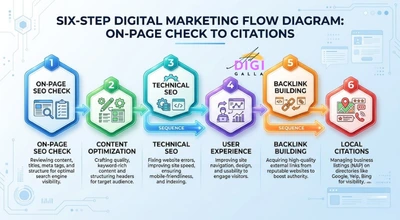
Step 1: Confirm your on page SEO is genuinely solid first. A backlink pointed at a poorly optimized page delivers a fraction of the value it would deliver to a well structured one, our on page SEO guide covers what “solid” actually looks like.
Step 2: Audit your current backlink and mention profile using a tool like the ones in our free backlinks checker roundup, so you know your actual starting point rather than guessing.
Step 3: Reclaim existing unlinked brand mentions first, since this is typically the fastest, lowest effort win available before investing in new outreach.
Step 4: Build one or two original, genuinely link worthy assets, original research, a useful tool, or a uniquely thorough resource, something worth linking to on its own merit rather than purely because you asked.
Step 5: Run consistent, targeted outreach, digital PR pitches, relevant guest posting, and broken link building, rather than a single large campaign followed by months of silence.
Step 6: If you serve a local market, complete and maintain consistent citations across relevant directories alongside this broader work, since the two reinforce each other for local visibility specifically.
A Hypothetical Example: Building Authority for a New Site
To make this concrete, here is a hypothetical example based on patterns commonly seen in this kind of work, not a real client case.
Imagine a small business with a newly redesigned website, solid on page SEO, but almost no backlinks or brand mentions anywhere online. A business in this position would typically start with the lowest effort wins first, claiming and completing local citations if the business serves a physical market, and searching for any existing unlinked mentions of the brand name that could quickly become real links.
A business following this kind of approach would typically move to building one genuinely useful piece of original content next, a small industry survey, a free calculator, or a uniquely thorough guide, and pitching that specifically to a handful of relevant publications and blogs, rather than attempting broad, generic outreach with nothing distinctive to offer. This is illustrative only, and the right sequence depends on your own site’s starting authority and industry.
Community Engagement: Reddit, Quora, and LinkedIn
Genuine participation in relevant online communities, answering questions on Reddit or Quora, contributing real insight to LinkedIn discussions in your industry, has become a more visible part of off page strategy in 2026, partly because AI driven search systems increasingly surface and reference discussion based content alongside traditional articles.
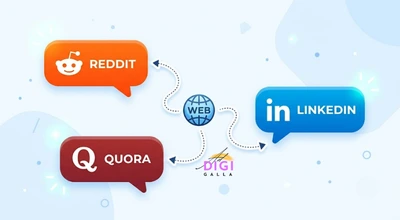
The distinction that matters here is genuine participation versus obvious self promotion. Answering a question thoroughly, with a link back to your site only when it is a genuinely useful, on topic resource rather than the entire point of the comment, builds the kind of account reputation that earns continued visibility in these communities over time. A pattern of comments that all exist purely to drop a link gets flagged and removed quickly by both moderators and the platforms’ own spam systems, and does nothing for your off page authority in the meantime.
This tactic works best treated as a long term reputation building habit rather than a campaign with a defined end date, a small amount of genuine, consistent participation compounds in a way a single burst of activity does not.
Podcast and Video Mentions
Podcast appearances and video collaborations have become a genuinely useful off page channel in 2026, partly for a reason that has nothing to do with the audio or video itself, search engines and AI systems increasingly crawl and parse podcast transcripts and video captions to detect entities and topics. When your brand name appears repeatedly in a transcript alongside genuine, substantive industry discussion, that functions as a proximity signal, similar in spirit to a co-occurrence mentioned on a text based site.
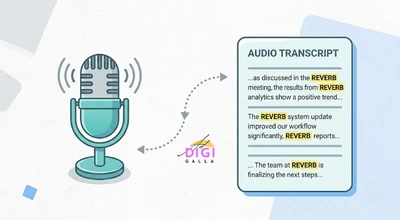
This does not mean every small business needs a podcast strategy. It means that if a genuine opportunity comes up, a relevant industry podcast, a YouTube collaboration, a webinar panel, it is worth treating as a real off page opportunity rather than dismissing it as unrelated to SEO simply because it is not a traditional article or backlink. The description and show notes that typically accompany a podcast episode are also a natural, low friction place to include a genuine link back to your site.
Common Off Page SEO Mistakes
Chasing link volume over link quality. As covered throughout this guide, a small number of genuinely relevant, high authority links consistently outperforms a large number of low quality ones, both in ranking impact and in long term safety.
Expecting fast results from a slow process. Off page SEO compounds over months, not weeks, judging a campaign’s success too early is one of the most common reasons businesses abandon strategies that were actually working.
Ignoring unlinked mentions entirely. Many businesses already have unclaimed brand mentions sitting on other sites right now, reclaiming these is consistently one of the fastest, lowest effort wins available, and most businesses never check for them.
Letting citation details drift out of consistency. A business name or address that varies even slightly across different directories dilutes the entity consistency signal that citations are meant to build in the first place.
Frequently Asked Questions
- What is off page SEO in simple terms?
Off page SEO covers everything that happens away from your own website that still affects how search engines and AI systems evaluate it, backlinks, brand mentions, citations, and social engagement, as distinct from on page SEO, which covers what you control directly on your own site.
- Is off page SEO still important in 2026?
Yes. Backlinks and other off site signals remain a foundational part of how search engines evaluate a site, and the same signals increasingly influence how often AI driven search systems cite a brand as well, adding a new layer of relevance rather than reducing it.
- How long does off page SEO take to show results?
Most sustainable off page strategies take three to six months to produce a noticeable ranking improvement, though leading indicators like referring domain growth and new brand mentions tend to show up faster and are worth tracking in the meantime.
- What is the difference between on page and off page SEO?
On page SEO covers what you control directly on your own site, content, structure, technical setup. Off page SEO covers signals earned from outside your site, links, mentions, citations, that are much harder to fake because they come from independent third parties.
- Is buying backlinks still worth the risk in 2026?
Generally not. Search engines’ spam detection systems have improved significantly at identifying manufactured link patterns, and the short term ranking gain rarely outweighs the risk of a manual action or broader ranking drop if the pattern is detected.
- Does participating on Reddit or Quora actually help off page SEO?
It can, indirectly, genuine, useful participation builds account and brand reputation over time, and AI driven search systems increasingly reference discussion based content alongside traditional articles. It only works as a long term reputation habit, not as a place to drop links purely for the sake of a backlink, which tends to get flagged and removed quickly.
- Do podcast appearances actually help off page SEO?
Indirectly, yes. Search engines and AI systems increasingly parse podcast transcripts and video captions to detect brand and topic entities, so repeated, genuine mentions of your brand alongside substantive discussion function as a real proximity signal, separate from any direct link in the episode’s show notes.
Final Thoughts
Off page SEO in 2026 comes down to building a reputation search engines and AI systems cannot easily fake on your behalf, genuine backlinks, real brand mentions, consistent citations, and relationships with people who have their own reasons to talk about you. It is slower than on page work and harder to control directly, which is exactly why it carries so much weight once it is genuinely earned.
If you want hands on help building real off page authority for your site, DigiAdGalla works with businesses across Delhi NCR on the full SEO picture, from technical setup through link building and digital PR. You can see our search engine optimization services or get in touch to talk through where your site currently stands.