If your website has been live for months and still is not showing up when you search for your own products or services, you are not alone, and the fix almost always comes down to a specific, learnable set of SEO steps rather than luck.
This guide walks through exactly how to rank your website on Google’s first page, in the order the work should happen, without vague promises about instant results.
What Does It Actually Take to Rank Your Website on Google’s First Page?
Ranking well always comes back to the same fundamentals: how closely a page matches what someone is actually searching for, how technically sound the site is, and how much genuine authority it has earned from other sources. If you want the full breakdown of relevance, authority, and experience, our guide to what SEO actually is covers it in depth. This post assumes you already know the basics and focuses purely on the sequence of steps that takes a site from invisible to page one.
Why Most Websites Never Make It to Page One
Most websites that fail to rank are not victims of some hidden Google penalty. They usually have one or two specific, fixable gaps: content that is too thin or too generic to genuinely answer the search, a site that loads slowly or breaks on mobile, or simply no other credible website linking to it, which leaves Google with no real signal that the page deserves trust.
Ranking on page one is rarely about a single trick. It is about closing these gaps one at a time, in a sensible order, which is exactly what the next five steps walk through.
Step 1: Do Real Keyword Research Before You Write Anything
Before writing a single page, find out what your actual customers type into Google, not what you assume they type. Look at the pages currently ranking on page one for that phrase, note what they cover well, and note what they leave out or explain poorly. That gap is usually your opening.

Avoid picking a keyword purely because it sounds important to your business. A phrase with real, consistent search volume and a clear match to your offering will always outperform a technically accurate phrase nobody actually searches for.
Step 2: Fix Your Technical SEO Foundation
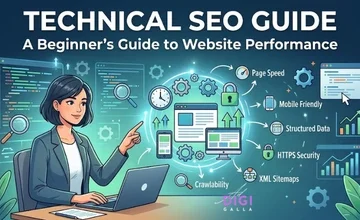
A page can have excellent writing and still fail to rank if the underlying site is technically broken. This includes slow load times, broken mobile layouts, duplicate pages competing against each other, and pages Google cannot crawl properly in the first place. Our full breakdown of technical SEO covers this in more depth, and it is worth checking for common Google indexing issues if pages are not appearing in search results at all, even after publishing.
Google also measures on-page performance directly through Core Web Vitals, a set of speed, responsiveness, and stability thresholds Google explains in its own Search Central documentation, and which we cover in more detail, including the exact numbers, in the page experience section of our SEO guide. A page that misses those thresholds by a wide margin tends to frustrate visitors and can hold back rankings even when the content itself is strong.
Step 3: Optimize Your On-Page Elements
Once the technical foundation is solid, the content on the page itself needs to clearly and naturally answer the search. This means a title tag and heading that match what the page actually delivers, body content that goes deeper than the current page one results, and internal links that guide visitors to genuinely related pages on your site. Our on-page SEO guide for beginners walks through each of these elements individually.
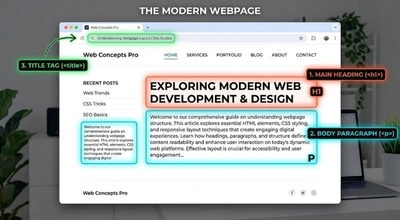
Avoid repeating your target phrase unnaturally throughout the page. A page that reads like it was written for a search engine instead of a person usually performs worse, not better.
Step 4: Build Genuine Authority With Backlinks
Content and technical fixes address relevance and experience, but authority comes from outside your own site. When other credible websites link to a page, it signals to Google that real people and businesses vouch for that content. This can come from genuine outreach, being featured in industry roundups, or simply publishing content detailed enough that other sites want to reference it naturally.
There is no reliable shortcut here. Buying links or exchanging them in bulk tends to do more harm than good over time, since Google has become increasingly good at recognizing patterns that look manufactured rather than earned.
Step 5: Match Search Intent, Not Just Keywords
A page can target the exact right keyword and still fail to rank if it does not match what the searcher actually wants. Someone searching to compare options wants a comparison, not a sales pitch. Someone searching with clear buying intent wants pricing and next steps, not a long educational essay. Understanding local search intent matters here too, since a national ranking strategy will not help a business that primarily serves customers in one city or neighborhood.
Getting intent wrong is one of the most common reasons a well-written, technically sound page still sits on page two.
How Long Does It Actually Take to Rank Your Website on Google’s First Page?
Most websites that follow the steps above start seeing meaningful movement within three to six months, though this varies widely by industry, competition, and how big the starting gaps were. A brand-new site in a competitive space will typically take longer than an established site fixing specific weaknesses.
As we explain in why traffic alone never grows a business, the real goal is not a single page one ranking for one phrase, but a growing set of pages that collectively bring in relevant, converting visitors across many related searches your customers are already making.
A Hypothetical Example of a Page One Ranking Journey
To make this concrete, here is a hypothetical example based on patterns commonly seen in SEO work, not a real client case.
Imagine a local dental clinic whose website had one thin homepage, no individual pages for specific treatments, and a contact form that took nearly six seconds to load on mobile. The clinic ranked nowhere for searches like “root canal near me,” even though it offered the service.

A typical process here would start with fixing mobile load speed, then building a dedicated page for each core treatment with real, specific content rather than one generic services page, and finally optimizing the Google Business Profile so the clinic appears for nearby, intent-matched searches. A business following this kind of approach would typically expect to see individual treatment pages start appearing on page one for specific, less competitive searches within a few months, well before it competes for broader, more crowded terms. This is illustrative only, and actual results depend heavily on local competition and starting point.
Common Mistakes That Keep Websites Stuck on Page Two
Publishing content once and never updating it. Search engines favor pages that stay accurate and relevant, and a page left untouched for years tends to slip as competitors improve theirs.
Chasing every keyword at once instead of building topical depth. A site with ten thin pages usually loses to a site with three genuinely thorough ones. This is also why it pays to understand why so many businesses waste their marketing budget chasing scattered tactics instead of a focused strategy.
Ignoring mobile experience. Since most searches now happen on mobile devices, a page that only works well on desktop is fighting with one hand tied behind its back.
Frequently Asked Questions
- How long does it take to rank your website on Google’s first page?
Most sites see meaningful movement within three to six months of consistent work, though highly competitive industries can take longer. Anyone guaranteeing a specific ranking or a fixed timeline should be treated with caution.
- Can I rank on page one without backlinks?
It is possible for low-competition, very specific searches, but for most competitive keywords, some level of genuine external authority is necessary alongside strong content and technical SEO.
- Does site speed really affect Google rankings?
Yes. Google measures page experience directly through Core Web Vitals, and a slow or unstable page can hold back rankings even when the content itself is strong.
- Is it possible to rank on page one with a new website?
Yes, particularly for specific, lower-competition searches, though new sites generally take longer to compete for broad, highly contested keywords than established sites with existing authority.
- What is the single biggest reason websites fail to reach page one?
There is rarely one single reason. Most sites fail due to a combination of thin content, technical issues, and a lack of any external site vouching for them through backlinks.
Final Thoughts
Ranking your website on Google’s first page is not about a secret formula. It comes down to fixing the technical foundation, building content that genuinely matches what searchers want, earning real authority over time, and being patient enough to let the work compound.
If you want hands-on help getting your website onto page one, DigiAdGalla works with businesses across Delhi NCR on the full process end to end. You can see our full range of work on the services page, explore our search engine optimization services directly, or get in touch to talk through your specific site.